Stones, Stars & Nature
Understanding Neolithic Monuments Through Landscape, Light, and Time
To understand the Neolithic world is to understand a universe measured not in years, but in shadows, seasons, and stone.
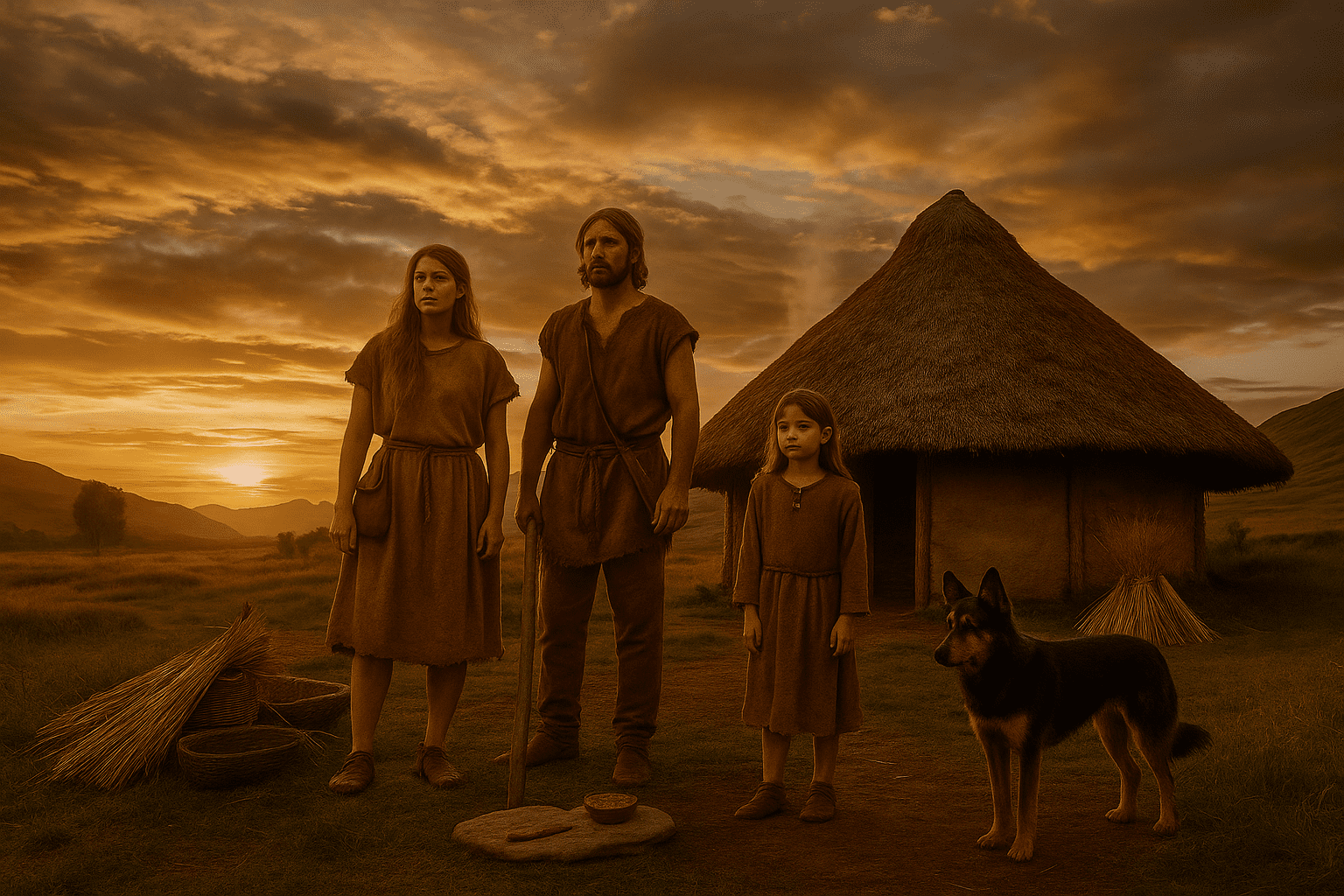
The Neolithic period marked one of the most profound changes in human history. Communities across Europe and the Near East shifted from mobile hunting and gathering to settled farming societies. With this change came new relationships between people, place, and the cosmos. The land was no longer simply a resource — it became a stage on which ritual, identity, memory, and celestial cycles converged.
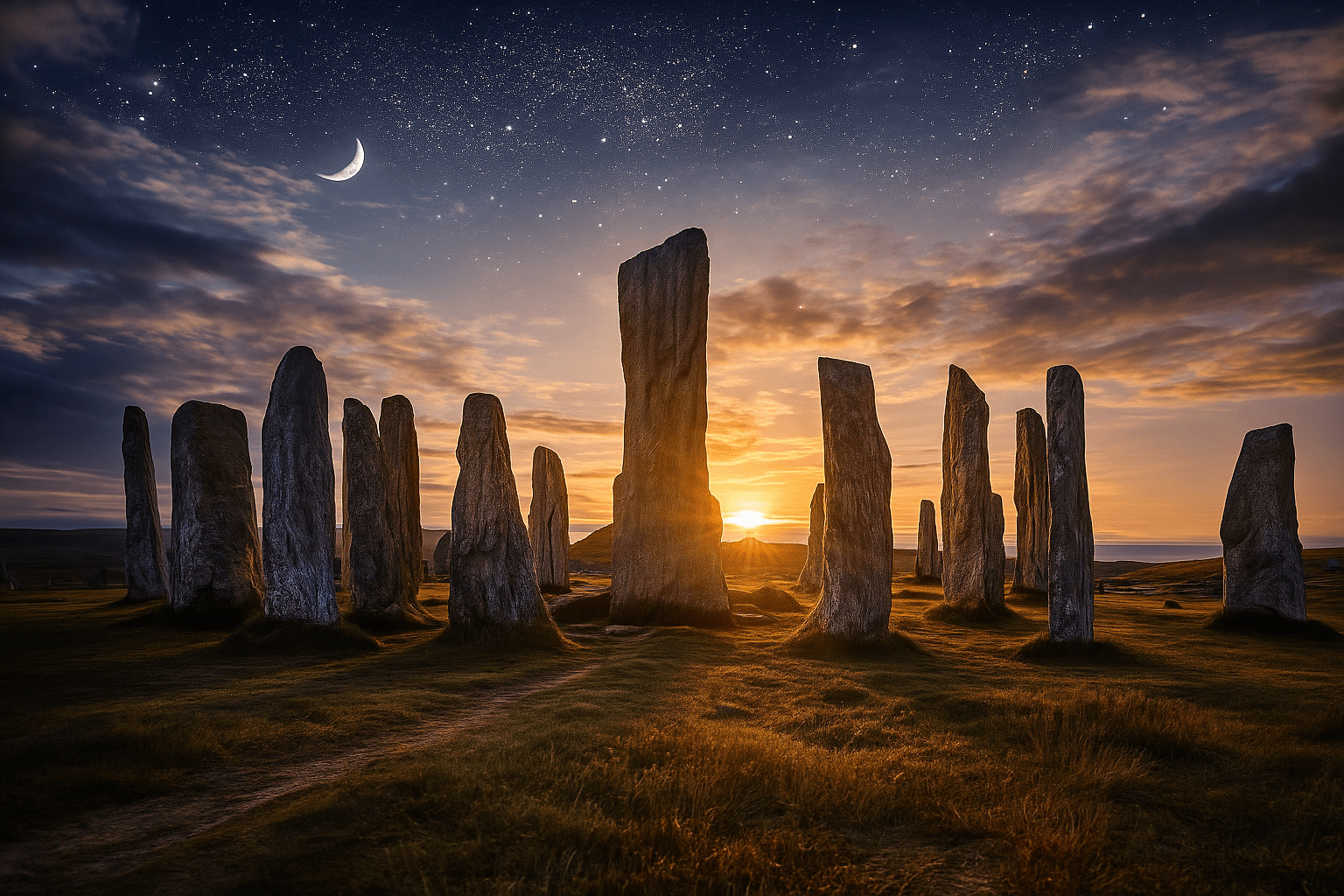
Among the most striking expressions of this new worldview are the megalithic monuments that appeared across Western Europe: chambered tombs, long barrows, standing stones, stone circles, and causewayed enclosures. Though diverse in form, these structures share a remarkable quality — they are anchored not only to the earth but also to the sky.
Monuments as Instruments of Light
Many Neolithic sites appear deliberately aligned with significant moments in the solar year — moments when the sun behaves differently, touching the landscape in ways that feel charged, symbolic, or sacred.
Key solar moments influencing monument design:
- Winter solstice sunrise
- Winter solstice sunset
- Summer solstice sunrise
- Equinox alignments
- Lunar standstills
At places like Newgrange in Ireland, the midwinter sunrise casts a single beam of light that enters the passage tomb and illuminates a chamber sealed in darkness for the rest of the year. The architecture transforms sunlight into an intentional ritual event — a symbolic “rebirth” in midwinter darkness.
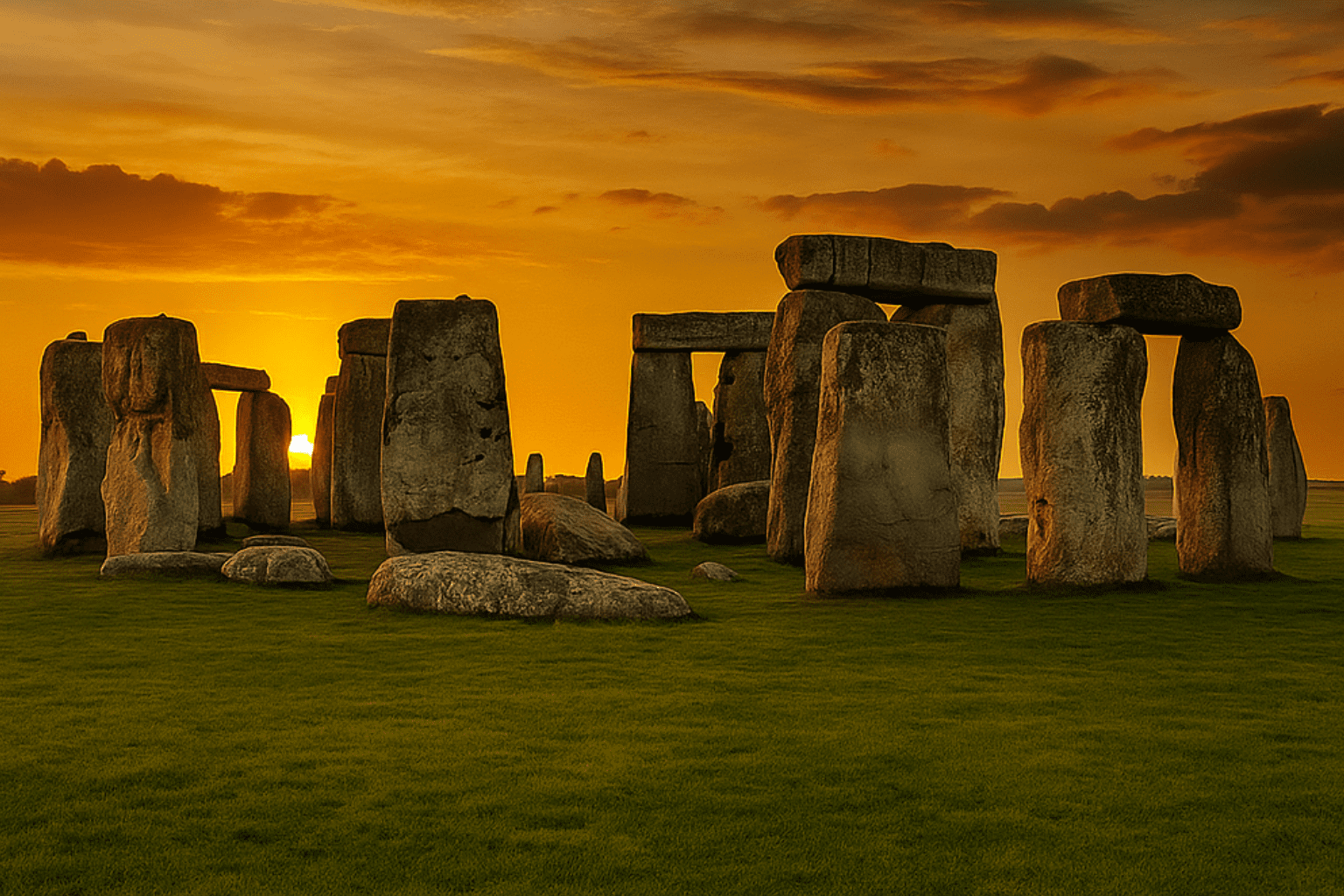
At Stonehenge, the axis of the monument frames both the midwinter sunset and midsummer sunrise, suggesting a sophisticated understanding of seasonal cycles, agricultural rhythms, and ritual gatherings.
These alignments reflect not only astronomical knowledge but also a worldview in which time was experienced through the movement of light, and stone became a medium through which communities could synchronise themselves with the cosmos.
Landscapes of Meaning
Neolithic monuments are rarely placed randomly on the landscape. They occupy hillsides, ridgelines, river terraces, and liminal zones — places that are visually striking, symbolically charged, or geographically significant.
Common placement patterns include:
- Elevated positions with panoramic views
- Sites overlooking water or meeting points of river systems
- Locations aligned with distant mountains or horizon features
- Boundaries between ecological zones (upland/lowland, land/sea, forest/open ground)
This suggests that people were choosing where to build not simply for practicality, but for symbolic resonance — places where the sky, land, and community could converge.
As archaeologist Chris Tilley and others argue, prehistoric landscapes were storied landscapes, woven with ancestral memory, mythological associations, ceremonial pathways, and seasonal gatherings.
Stone as Memory, Stone as Ritual
The choice of stone itself carried meaning.
Different types of stone — sarsen, bluestone, granite, limestone — were transported across vast distances, often requiring immense communal effort. These stones were selected not merely for durability but likely for their colour, texture, sound, or cultural significance.
Within many Neolithic tombs, engraved motifs such as spirals, chevrons, zigzags, and concentric circles appear.
These images may represent:
- solar cycles
- water or life energy
- maps of ritual pathways
- symbolic expressions of ancestry
- trance or altered-state imagery
Though their meanings are not fully known, they reflect a visual language deeply tied to the natural world.
Timekeeping, Ritual, and Community Identity
The cumulative evidence suggests that Neolithic monuments served multiple overlapping functions:
1. Seasonal Timekeepers
Alignments with solstices and equinoxes would have helped communities track agricultural cycles — when to sow, when to harvest, when to prepare for winter.
2. Ritual Spaces
Many sites show evidence of feasting, offerings, processions, or symbolic reuse of older monuments.
3. Ancestral Monuments
Burials, cremations, and long barrows link the living to the dead, reinforcing lineage and continuity.
4. Community Gathering Places
The size of monuments implies large-scale participation — shared labour reinforcing social bonds.
5. Expressions of Cosmological Belief
The sun, stars, and changing seasons are woven into the architecture itself — the monument becomes a kind of cosmic instrument, translating celestial movement into earthly experience.
To walk through a Neolithic site is to walk through a calendrical landscape — a place where time is measured by the movement of shadow across stone.
Celestial Cycles and Human Experience
Why were the solstices and equinoxes so important?
For early farming societies, the agricultural year depended on accurate seasonal knowledge. But beyond practicality, these celestial markers also shaped myth, ritual, and social meaning.
In many cultures:
- winter solstice represents renewal
- summer solstice represents abundance
- equinoxes represent balance
- lunar cycles guide ceremonial timing
These associations appear to have roots reaching deep into prehistory.
Sites such as Nabta Playa in Egypt, Mnajdra in Malta, and Maeshowe in Orkney also show solar alignments, suggesting a shared pan-Neolithic interest in the sky as a source of order, symbolism, and ritual authority.
🌿 Closing Reflection
Neolithic monuments are more than stones arranged in fields — they are expressions of a worldview, one that understood the natural world as a living, rhythmic, interconnected system. Through alignments, landscape placement, and communal effort, these early societies created enduring symbols of their relationship with the cosmos.
To walk among these stones today is to step into a universe where light, season, ritual, and memory intertwine, offering a glimpse into how our ancestors understood their place between earth and sky.
📚 References & Suggested Reading
Bradley, R. (1998). The Significance of Monuments: On the Shaping of Human Experience in Neolithic and Bronze Age Europe. London: Routledge.
Bradley, R. (2000). An Archaeology of Natural Places. London: Routledge.
Renfrew, C. (1976). “Megaliths, Territories and Populations.” Man (New Series) 11 (1): 145–166.
Ran, B. & Liran, R. (2008). “Midsummer Sunset at Neolithic Jericho.” Time and Mind: The Journal of Archaeology, Consciousness and Culture, 1(3): 273–284.
Ruggles, C. (2005). Archaeoastronomy in the Twenty-First Century: A Holistic Approach. New York: Springer.