A Guide to the Earliest Chapters of Human History
Prehistory covers the vast span of human existence before written records. It includes the evolution of our species, the development of tools, the shift from nomadic life to farming, the building of stone monuments, and the formation of the first settled communities. This article offers a detailed, accessible introduction to the Palaeolithic, Mesolithic, and Neolithic eras, placing Britain and Western Europe within the wider story of global human development.
What Is Prehistory?
Prehistory refers to all human life before writing was invented. It is not a single era but a sweeping, interconnected expanse of time covering millions of years. During this period:
- Humans evolved from earlier hominin species
- People migrated across continents
- Tools and technologies transformed radically
- Art, ritual, and symbolic behaviour emerged
- Farming began and villages formed
- Megalithic monuments appeared across Europe
Because written documents do not exist for this period, everything we know comes from archaeology, anthropology, geology, genetics, and material culture. Every flint tool, every animal bone, every potsherd, and every burial mound forms part of the evidence base that allows us to reconstruct the earliest human story.
This is why Prehistory is so important for modern historical understanding: it establishes the foundations of civilisation, technology, and culture long before kingdoms, empires, and literacy arrived.
Why Prehistory Matters
Prehistory is not simply “the time before history.” It is the time that made us human.
Studying prehistoric eras helps us understand:
Human Origins & Evolution
How our species emerged, adapted, survived extreme climate shifts, and spread across the globe.
Technological Innovation
Every tool — from the first stone flake to polished axes — represents a leap in intelligence, planning, and skill.
Creativity & Symbolism
Cave art, figurines, beads, and ritual objects show the emergence of imagination, spirituality, and shared belief systems.
Climate Change & Migration
Ice Ages, warm periods, rising seas, and shifting landscapes shaped how people lived, moved, and interacted.
The Birth of Communities
Farming, herding, food storage, pottery, longhouses, and villages mark the earliest forms of society.
The Roots of Britain & Western Europe
Prehistoric Britain was a landscape alive with hunters, farmers, engineers, artists, and astronomer-builders. Understanding this period illuminates everything that follows — from the Bronze Age to modern national identity.
How We Study Prehistory
Because no written accounts exist, researchers rely on multiple disciplines, each offering part of the puzzle:
Archaeology
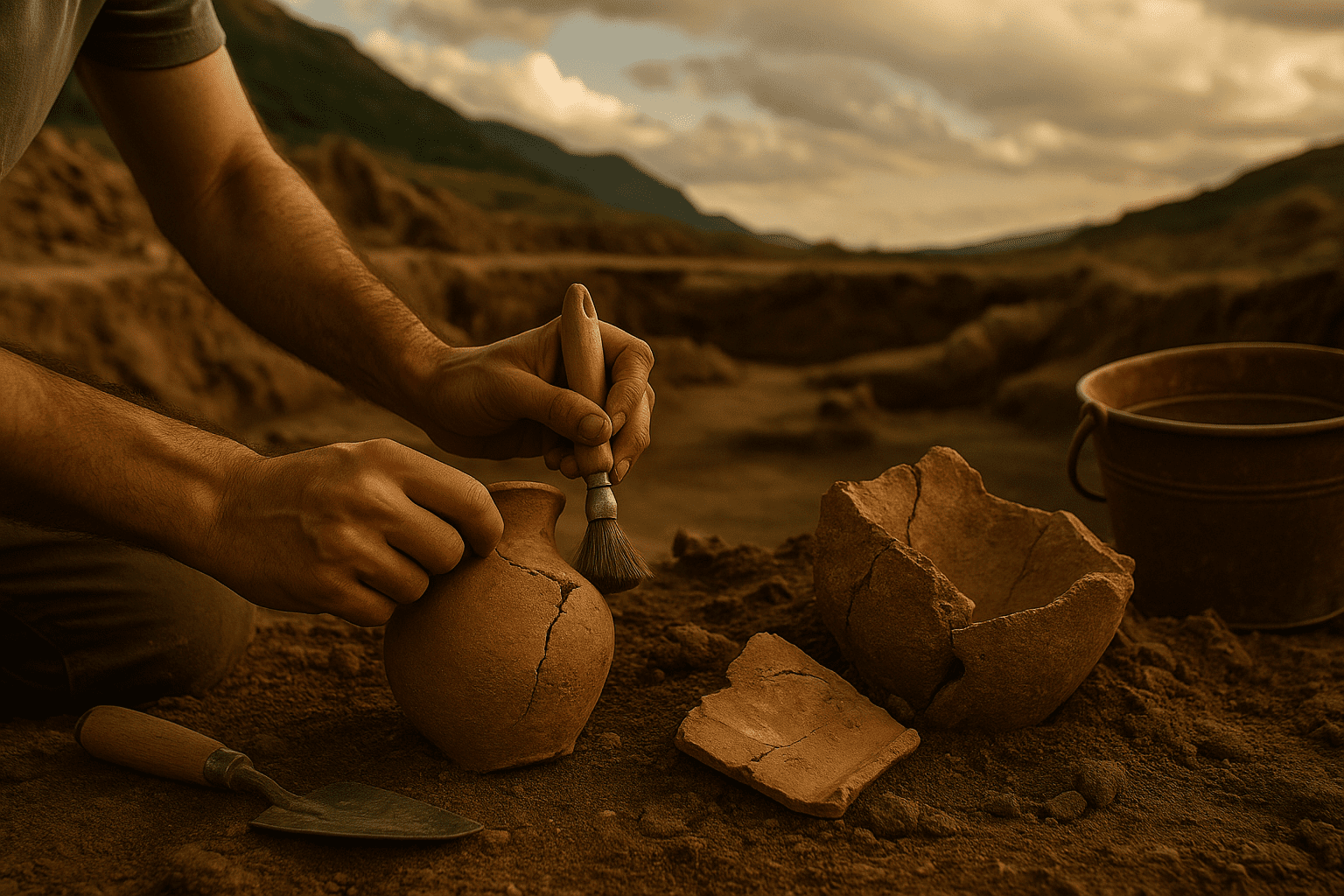
Excavations reveal artefacts, tools, structures, bones, and environmental evidence.
Anthropology
Comparisons with traditional societies help interpret behaviour, ritual, and social structure.
Geology & Climate Science
Sediment layers, fossils, pollen, and isotopes reconstruct ancient environments.
Radiocarbon Dating
Allows us to date organic remains up to ~50,000 years old.
DNA & Genetics
Reveals ancient migrations, interbreeding with Neanderthals and Denisovans, and long-term population patterns.
Experimental Archaeology
Recreates ancient technologies to understand how tools, houses, and monuments were built.
Together, these methods make Prehistory one of the most dynamic fields of modern research, producing new discoveries every year.
The Three Stone Age Eras
Prehistory is traditionally divided into major phases based on technological development:
Palaeolithic (Old Stone Age) | c. 3.3 million – 10,000 BCE
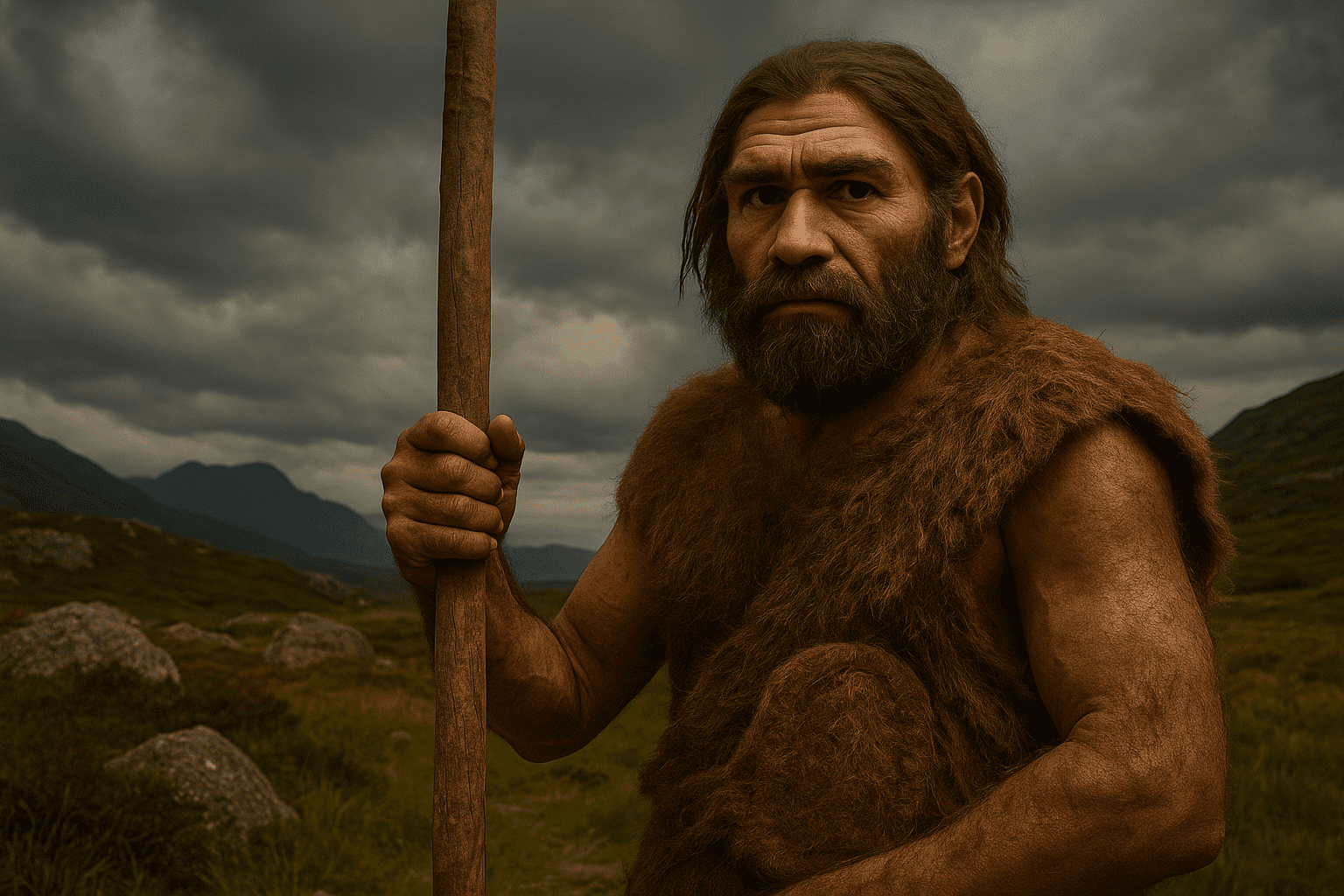
This is the longest and most fundamental era of human existence.
Key Features
- Early humans evolve and adapt
- Hunter-gatherer lifestyles
- Stone tools (Oldowan, Acheulean, Mousterian)
- First art and symbolic behaviour
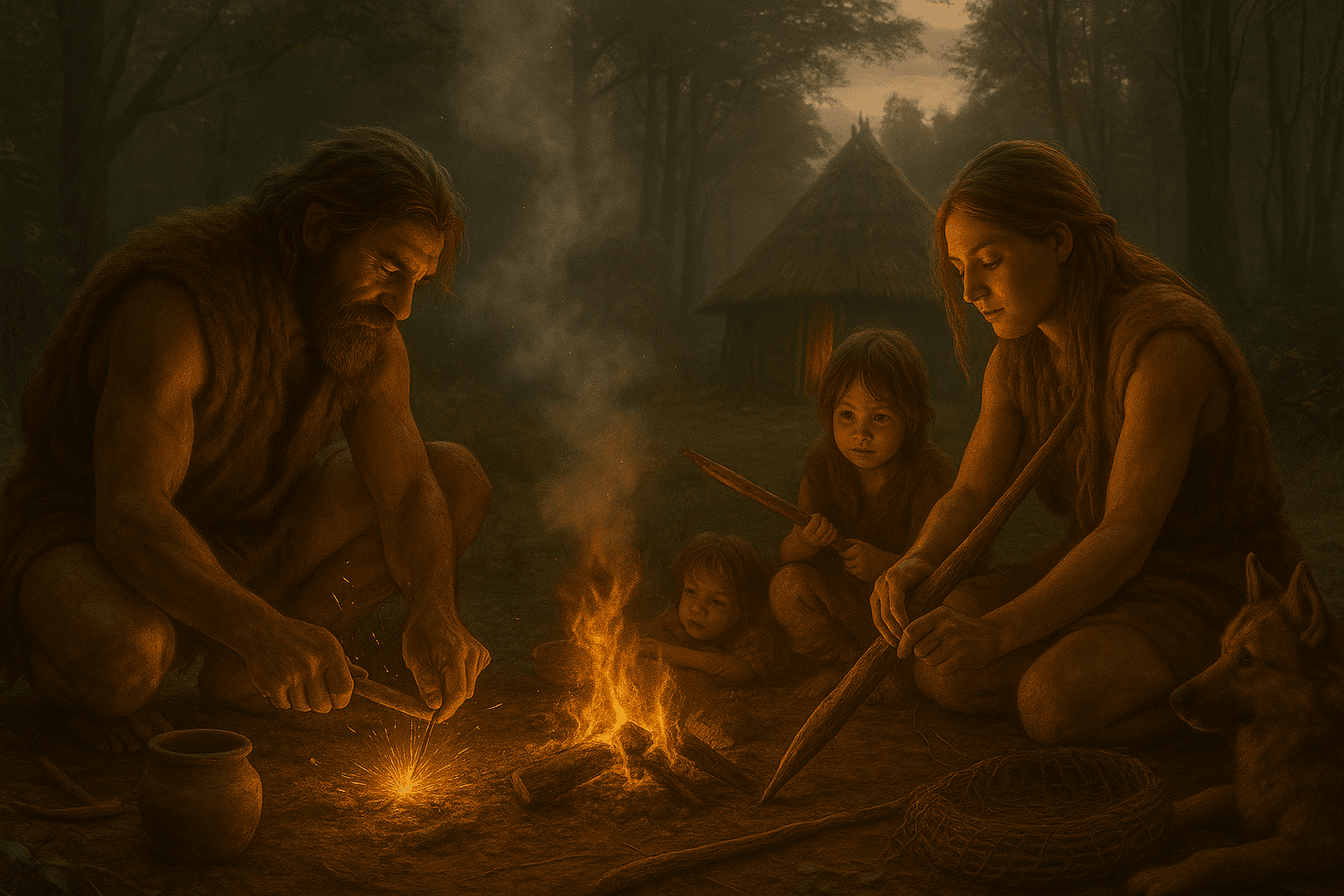
- Control of fire
- Burials and ritual
- Global migrations
In Britain
Most of Britain’s Palaeolithic past is hidden beneath layers of glacial activity, but finds from places like Boxgrove, Happisburgh, and Kent’s Cavern show that early humans lived here long before the last Ice Age.
Cultural Highlights
- Cave art at Lascaux, Chauvet, and Altamira
- Venus figurines expressing fertility and shared symbolism
- Mastery of stone knapping and complex hunting strategies
The Palaeolithic reveals the deep roots of human creativity, resilience, and adaptability.
Mesolithic (Middle Stone Age) | c. 10,000 – 4,000 BCE
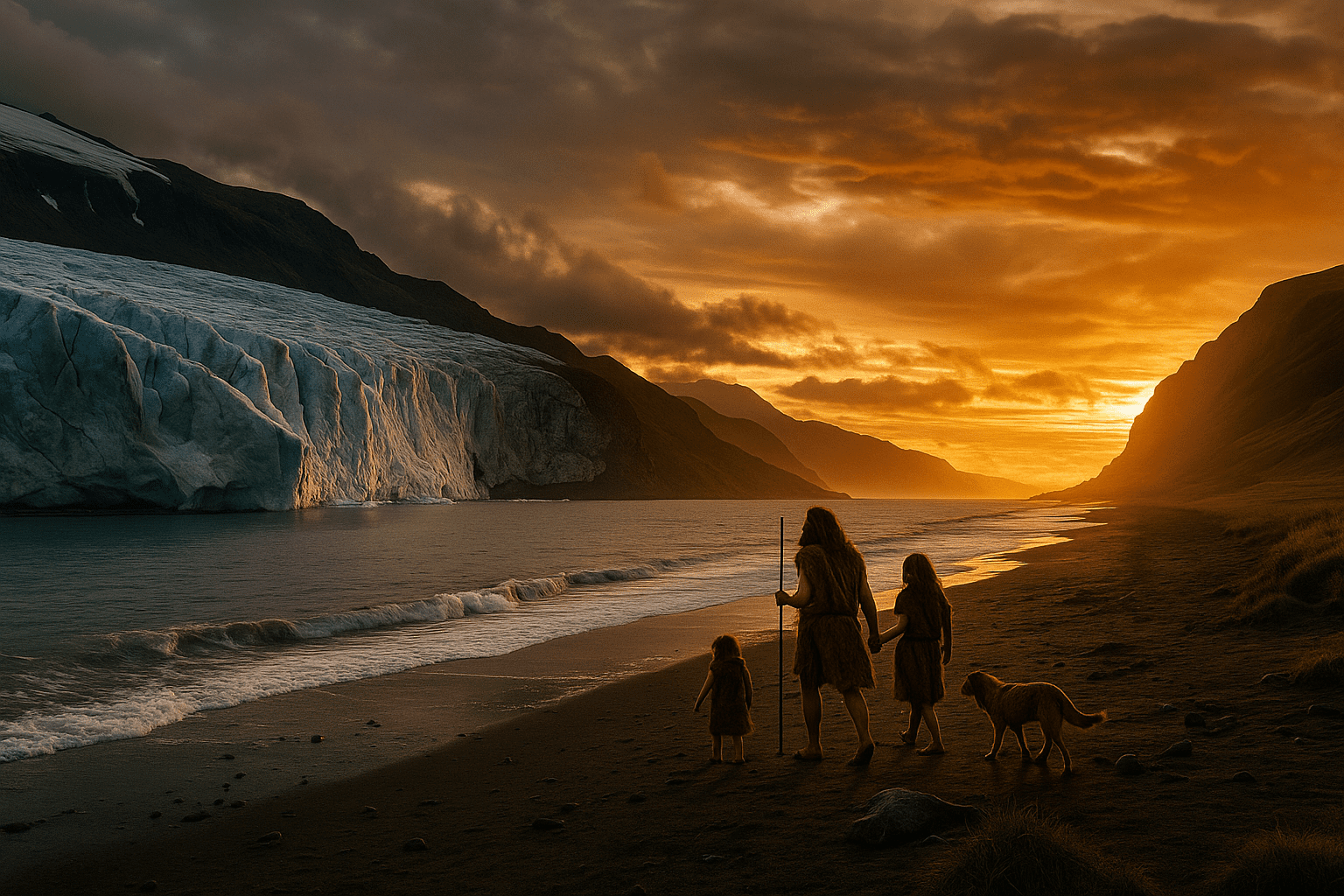
The Mesolithic begins at the end of the last Ice Age. As climates warmed, forests spread, and coastlines transformed.
Key Features
- Hunter-gatherers adapt to forests and rivers
- Microliths (small, precise flint tools)
- Fishing, trapping, canoe-building
- Semi-permanent seasonal camps
- Rising sea levels reshape landscapes
In Britain
The melting ice caps created the Irish Sea, the North Sea, and cut Britain off from Europe by flooding Doggerland, a vast prehistoric land bridge. Sites like Star Carr provide extraordinary insight into Mesolithic life.
The Mesolithic is often overlooked, but it represents one of the most ingenious and adaptive phases of human history.
Neolithic (New Stone Age) | c. 4,000 – 2,500 BCE
This era brings profound transformation — the Neolithic Revolution, one of the most important turning points in human history.
Key Features
- Farming and livestock domestication
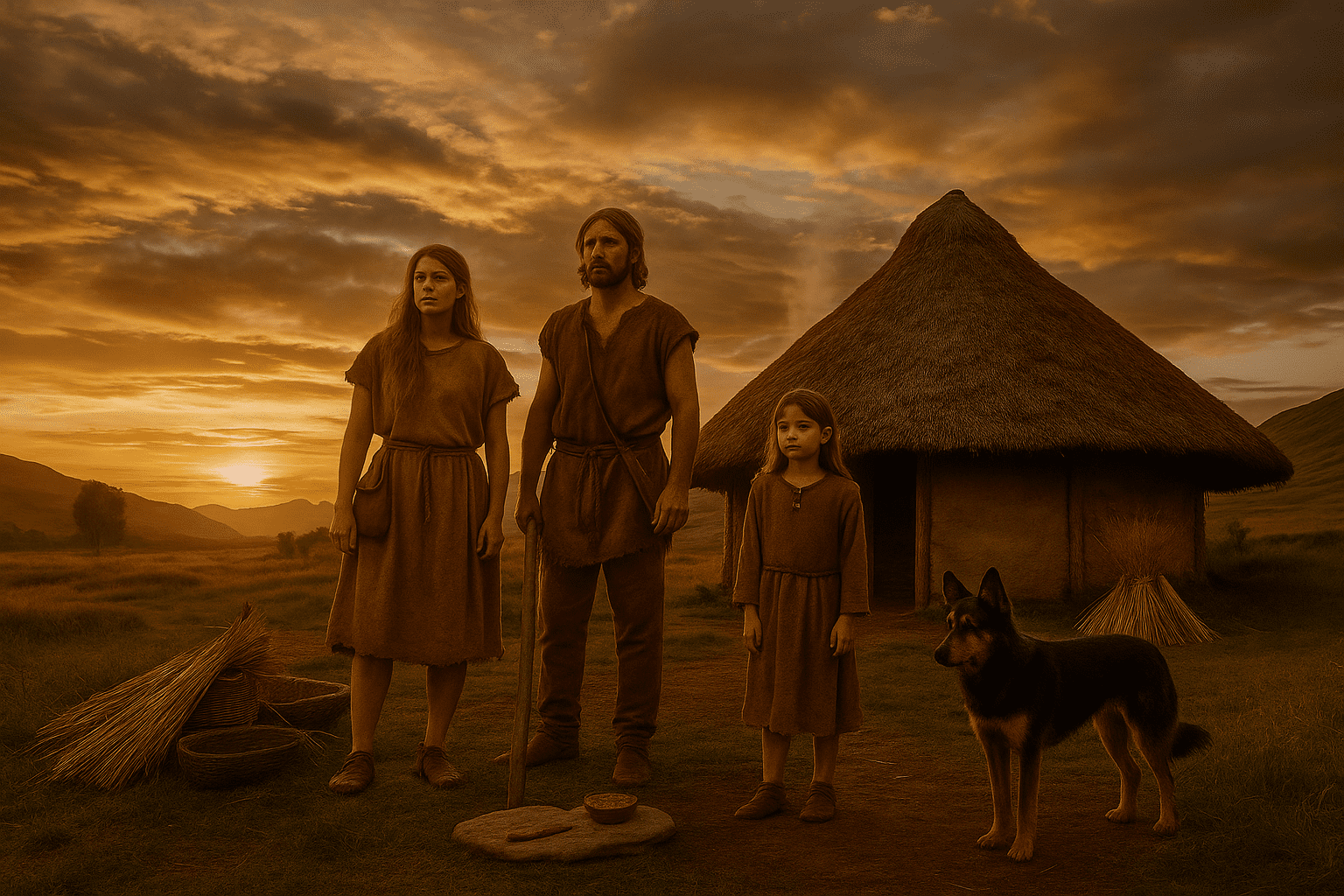
- Permanent settlements
- Pottery
- House architecture
- Monumental construction
- Ceremonial landscapes
In Britain & Western Europe
This is the age of:
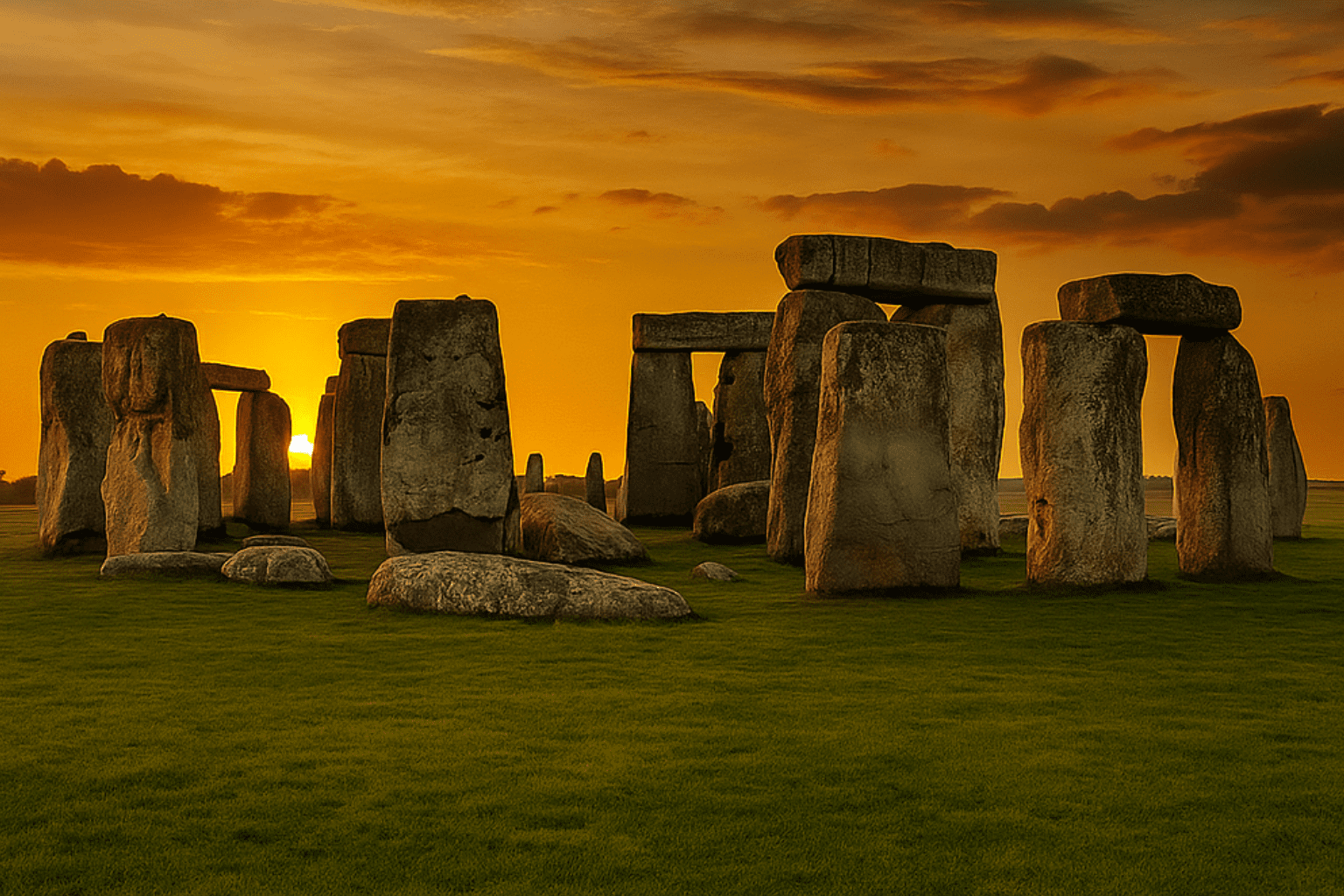
- Stonehenge
- Avebury
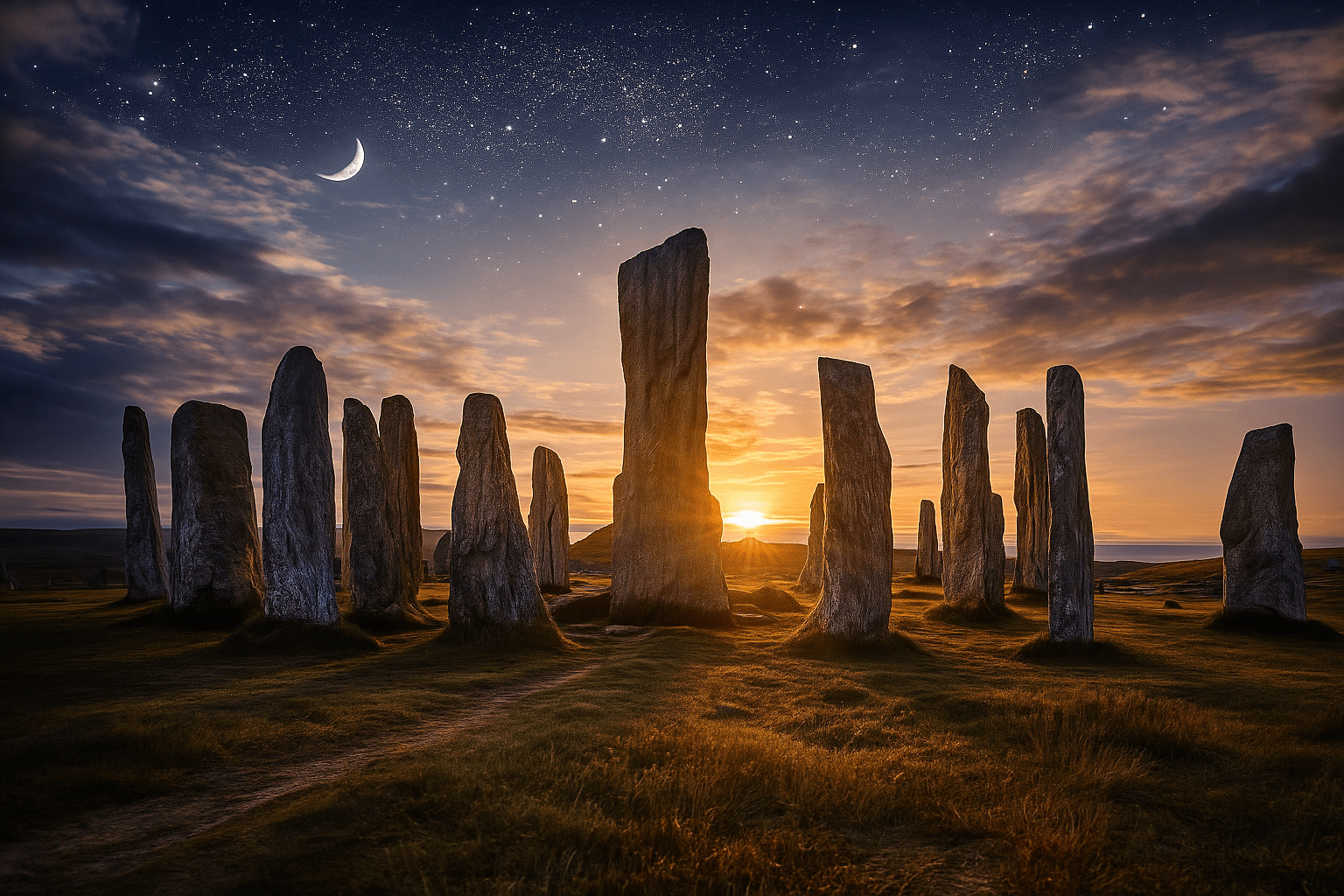
- Callanish
- Newgrange
- Skara Brae
- Ggantija Temples
- Carnac Megaliths
- Barnenez Cairn
These structures show extraordinary skill, astronomical knowledge, and cultural sophistication. They were not “primitive”—they were observatories, calendars, burial chambers, gathering places, and communal centres.
The Neolithic lays the foundations for every complex society that comes after.
The Transition to the Bronze Age
By around 2500 BCE, new technologies arrive:
- Metalworking
- Long-distance trade networks
- New religious practices
- The Beaker culture
- Large-scale engineering projects
This shift marks the end of the Stone Age and the beginning of Britain’s Bronze Age.
Prehistory in Britain: A Landscape of Memory
Britain is home to some of the most important prehistoric sites in the world. These landscapes contain clues about:
- Ancient astronomy
- Seasonal rituals
- Community identity
- Engineering knowledge
- Burial traditions
- Social hierarchy
- Migration and cultural exchange
The continuity from Palaeolithic hunters to Neolithic farmers creates a long, rich human story rooted in the land itself.
How Prehistory Shapes the Modern World
Many of our modern concepts — family, community, spirituality, technology, engineering, farming, navigation, calendars — have their roots in prehistoric innovation.
Understanding Prehistory helps us appreciate:
- The long arc of human creativity
- The ingenuity of early people
- The threads connecting past and present
- The deep time of the British landscape
- The resilience of humans in changing climates
It also helps us challenge outdated ideas. Prehistoric people were not “primitive.” They were:
- Skilled astronomers
- Builders
- Navigators
- Artists
- Storytellers
- Ritual specialists
- Engineers
Their achievements endured for thousands of years.
Further Reading & External Resources
- English Heritage: Introduction to Prehistoric England
- The Prehistoric Society – Resource Overview
- Ashmolean Museum – Prehistoric Britain
- Smithsonian Human Origins Timeline
- NHM London – Origins of Our Species
- BBC Bitesize – Stone Age to Iron Age
- British Museum – Peek Into Prehistory
- Historic England – Stone Age to Iron Age Timeline