The Paleolithic
c. 2,500,000 – 10,000 BCE
Humanity’s Deepest Roots: Life, Art, Technology, and Survival in the Old Stone Age
1. Introduction
The Palaeolithic—meaning “Old Stone Age”—represents the longest and most foundational chapter of human history. Spanning more than two million years and encompassing the evolution of multiple human species, this era witnessed the emergence of toolmaking, fire, art, ritual behaviour, and the global spread of hominins across continents.
It is in the Palaeolithic that Homo sapiens first appears, where humans developed symbolic thinking, and where some of the world’s most iconic archaeological masterpieces were created—from the caves of Chauvet and Lascaux to the monumental open-air sites of Africa and the Levant.
This period ends around 10,000 BCE with the close of the last Ice Age and the dawn of new subsistence systems that would eventually usher in Mesolithic lifeways.
2. Chronology & Geography
The Palaeolithic is typically divided into three major phases:
Lower Palaeolithic | c. 2.5 million – 300,000 BCE
- Earliest stone tools (Oldowan)
- Homo habilis, Homo erectus, and first migrations out of Africa
- Acheulean handaxe technology
Middle Palaeolithic | c. 300,000 – 45,000 BCE
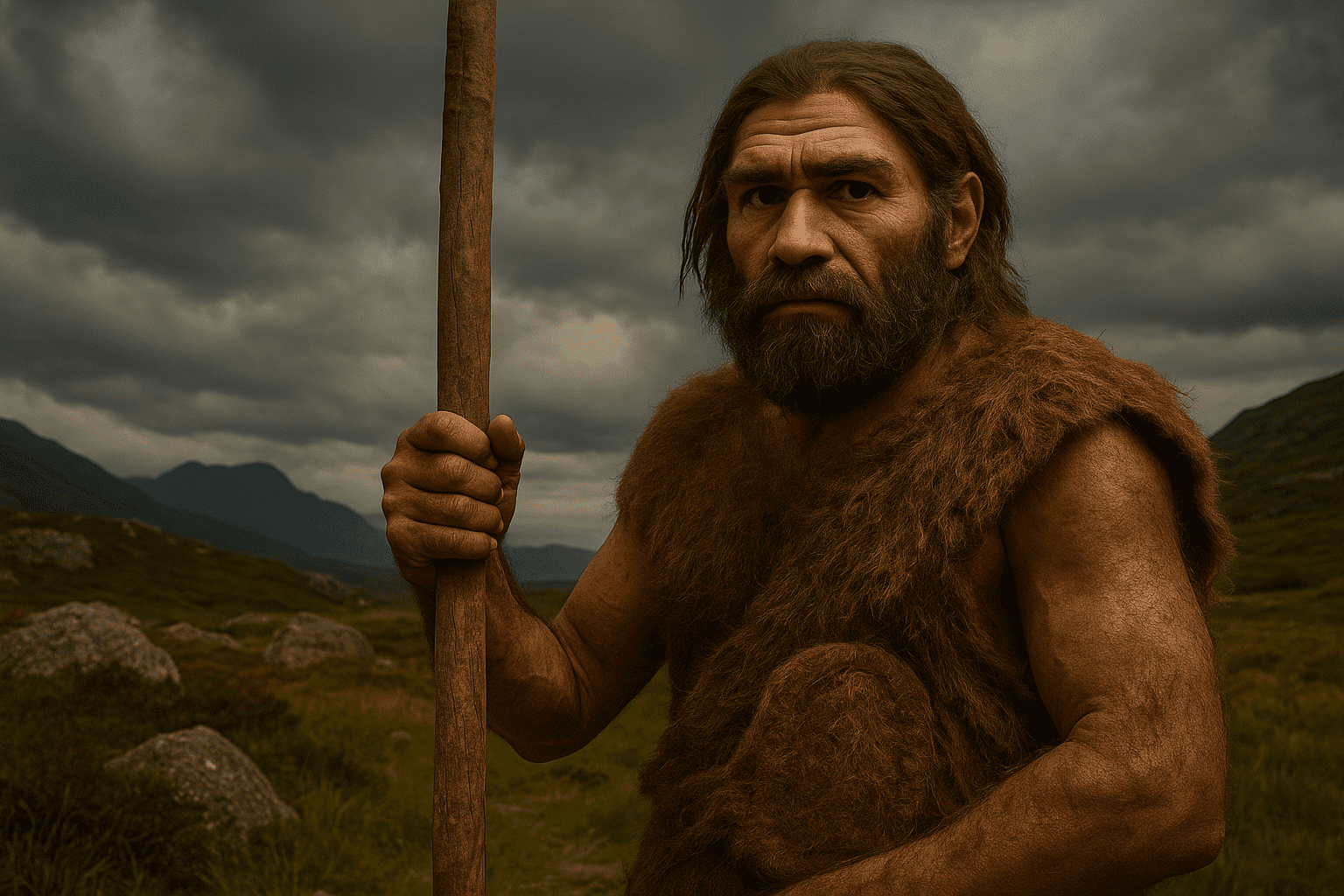
- Neanderthals in Europe
- Early Homo sapiens in Africa
- Intentional burials and symbolic behaviour
Upper Palaeolithic | c. 45,000 – 10,000 BCE
- Global spread of Homo sapiens
- Advanced tools, art, ornamentation
- Cave paintings, figurines, musical instruments
Geographic scope
The Palaeolithic world covers all inhabited continents except Antarctica.
Key regions include:
- East and South Africa
- Levant (Israel, Lebanon, Syria, Jordan)
- Europe (France, Spain, Germany, UK)
- Central Asia and Siberia
3. Climate & Environment
The Palaeolithic was shaped by dramatic climatic fluctuations—multiple Ice Ages, periods of glacial advance and retreat, and major ecological shifts.
Glacial Cycles
- Northern continents covered in ice
- Sea levels up to 120 metres lower than today
- Land bridges formed (e.g., Beringia between Siberia and Alaska)
Ecosystems & Megafauna
Humans lived alongside:
- mammoths
- woolly rhinoceros
- giant deer
- cave lions
- aurochs
These environments encouraged nomadic lifeways, flexible technology, and highly mobile seasonal strategies.
4. People & Society
Palaeolithic societies were adaptive, intelligent, and socially complex.
Population
- Small, dispersed groups
- Approximately 20–50 individuals per band
- Total global population rarely exceeded 1 million
Social Structure
Evidence suggests:
- cooperative hunting
- shared childcare
- knowledge transmission through storytelling
- division of labour based on skill and mobility
Burial & Belief
Middle and Upper Palaeolithic burials indicate:
- intentional placement of bodies
- use of pigments (ochre)
- grave goods (tools, ornaments)
These imply symbolic thinking and early ritual practices.
5. Tools & Technology
Stone tools define the Palaeolithic, but technology expanded throughout the era.
Oldowan Tools (2.5 million years ago)
Simple flakes used for butchery and scraping.
Associated species: early Homo, including Homo habilis.
Acheulean Tools (1.6 million years ago)
Characterised by the iconic handaxe—tear-drop shaped, symmetrical, multi-functional.
Associated species: Homo erectus, Homo heidelbergensis.
Middle Palaeolithic Innovations
- prepared-core (Levallois) flake production
- hafted tools
- fire mastery
- adhesives and birch tar
Upper Palaeolithic Specialisations
- blade technology
- bone needles
- fishhooks
- spear throwers (atlatls)
- ropes and nets
- bows (possibly emerging late Upper Palaeolithic)
These technologies supported increasingly specialised subsistence strategies and expanded human adaptability.
6. Subsistence & Daily Life
Palaeolithic humans engaged in:
Hunting
- cooperative strategies
- large game (mammoth, bison)
- small game and scavenging
Gathering
- nuts, berries
- tubers
- seeds
- shellfish (in coastal groups)
Seasonal Mobility
Groups moved with:
- migrating herds
- ripening plant resources
- changing climate zones
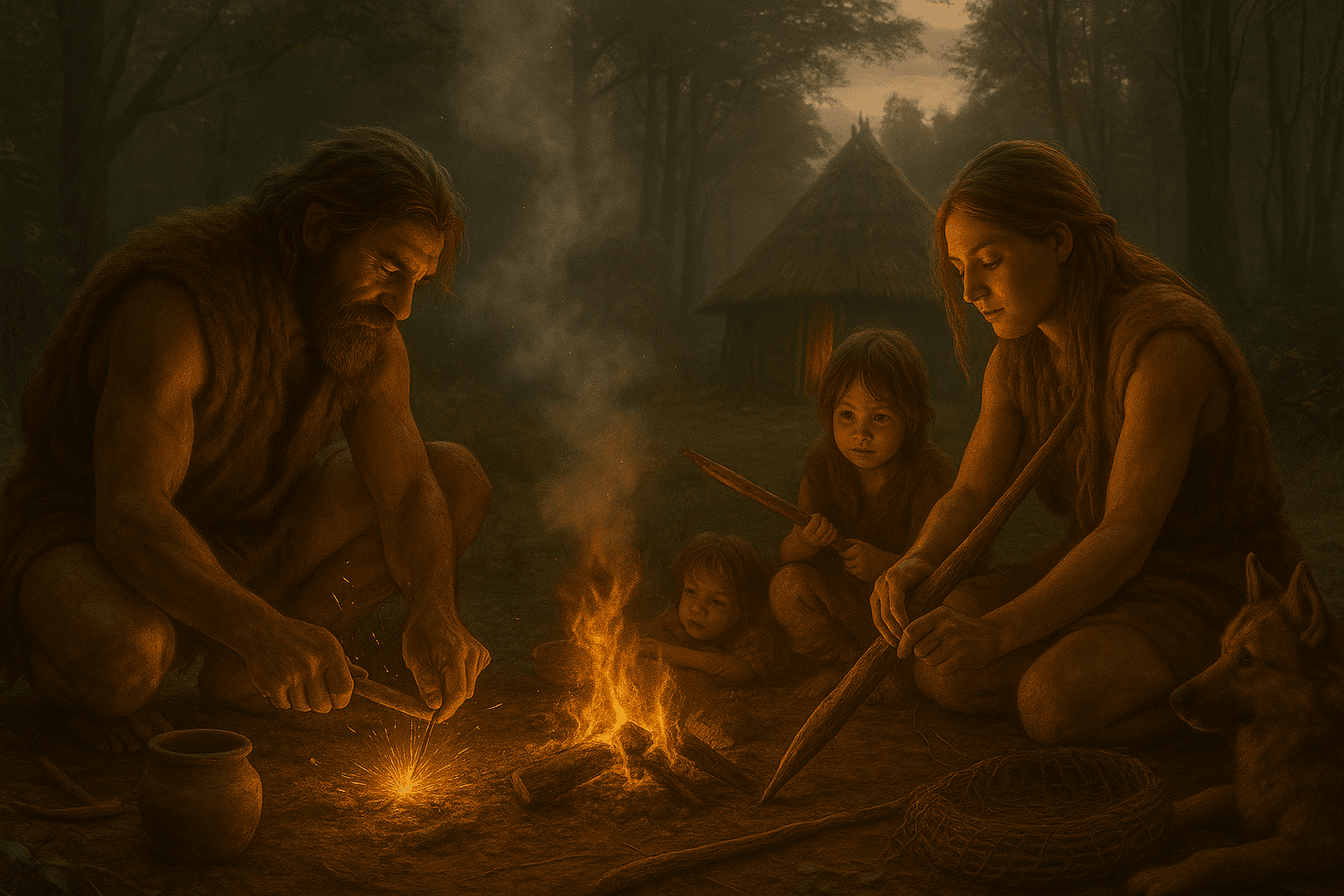
Fire
By 400,000 years ago, controlled fire was widespread.
Fire meant:
- cooked food
- warmth
- extended daily activity
- social gathering
- protection
7. Art, Ritual & Symbolism
The Palaeolithic gave humanity its first surviving expressions of art, ritual, and symbolic thought.
Cave Art
Famous examples include:
- Chauvet Cave (France) — 36,000 BCE
- Lascaux (France) — 17,000 BCE
- Altamira (Spain) — 20,000 BCE
Themes include
- animals
- abstract signs
- hand stencils
- composite creatures
- scenes of movement and hunting
Links
https://en.wikipedia.org/wiki/Chauvet_Cave
https://en.wikipedia.org/wiki/Lascaux
Portable Art
- Venus figurines (e.g. Willendorf)
- carved animals
- decorated tools
- bone flutes
These objects show aesthetic sophistication and symbolic meaning.
Ritual Spaces
Sites such as Blombos Cave (South Africa) reveal early evidence of:
- ochre processing
- personal ornamentation
- symbolic markings
This suggests abstract thinking long before European cave art.
8. Archaeological Evidence & Key Sites
Africa — Cradle of Humanity
Olduvai Gorge (Tanzania)
Koobi Fora (Kenya)
Blombos Cave (South Africa)
Europe — Ice Age Art & Lifeways
Boxgrove (UK) — earliest human remains in Britain
Chauvet (France)
Lascaux (France)
Dolní Věstonice (Czech Republic) — Venus figurine & settlement
Near East — Early Symbolism
Qafzeh Cave (Israel) — intentional burials
Skhul Cave (Israel) — early modern humans
Wikipedia site overviews
https://en.wikipedia.org/wiki/Boxgrove
https://en.wikipedia.org/wiki/Doln%C3%AD_V%C4%9Bstonice
9. Cultural Legacy & Significance
The Palaeolithic shaped everything that followed.
It gave humanity:
- the first technologies
- the first symbolic systems
- cosmological imagination
- art
- ritual behaviour
- long-distance social networks
- adaptability across biomes
The cognitive and cultural foundations of modern humans were laid long before farming, cities, or writing.
Understanding the Palaeolithic allows us to see:
- that intelligence is ancient
- that creativity is primal
- that survival shaped meaning in every generation
It connects us to our earliest ancestors not as primitive beings, but as fully human minds navigating an unpredictable world.
10. References & Further Reading
Academic Sources:
Bar-Yosef, O. (2002). “The Upper Paleolithic Revolution.” Annual Review of Anthropology, 31: 363–393.
Gamble, C. (1999). The Paleolithic Societies of Europe. Cambridge University Press.
Mellars, P. (2006). “Why Did Modern Human Populations Disperse from Africa ca. 60,000 Years Ago?” PNAS, 103(25): 9381–9386.
Mithen, S. (1996). The Prehistory of the Mind. Thames & Hudson.
Stringer, C. (2011). The Origin of Our Species. Penguin.
Accessible Overviews:
https://en.wikipedia.org/wiki/Paleolithic
https://www.britannica.com/event/Paleolithic-Period
https://humanorigins.si.edu/evidence/human-evolution-timeline