Prehistory Archaeology
Reading the Human Past: How Archaeology Reveals Prehistory
Long before writing, cities, or recorded histories, humanity left traces of its existence scattered across landscapes, caves, riverbanks, and ancient settlements. Archaeology is the discipline that pieces these traces together. By studying artefacts, bones, hearths, pottery, tools, and monumental structures, archaeologists reconstruct not only what early humans did, but how they lived, what they valued, and how their world changed across time.
Prehistoric archaeology transforms fragments of material culture into stories — stories of innovation, survival, belief, and the evolving relationship between people and their environment. It is the foundation that allows us to understand the Palaeolithic, Mesolithic, and Neolithic periods as interconnected chapters of human development.
What Archaeology Studies in Prehistory
Stone Tools: The Earliest Evidence of Human Behaviour
Stone tools form the backbone of prehistoric study. From the earliest Oldowan flakes to the elegant Acheulean hand-axe and eventually the microliths and polished axes of the Mesolithic and Neolithic, tools reveal:
- cognitive capability
- hunting strategies
- daily tasks
- regional cultural styles
Tools also enable archaeologists to date layers of occupation through typology and context.
Art and Symbolism
Art appears tens of thousands of years before writing, offering our earliest glimpses into the minds of ancient people.
- Cave art (e.g., Lascaux, Altamira, Chauvet)
- Carved figurines (e.g., “Venus” forms, animal statues)
- Engraved bones and stones
- Portable art objects
These expressions point to storytelling, ritual, identity, and symbolic behaviours that shaped early societies.
Human and Animal Remains
Skeletal remains allow archaeologists to explore:
- diet and nutrition (isotopes)
- migration (DNA and strontium signatures)
- disease and injury
- social relationships (burial placement and grave goods)
Animal bones reveal hunting preferences, domestication patterns, and seasonal occupation of sites.
Settlements and Structures
Prehistoric settlements illustrate how communities organised themselves:
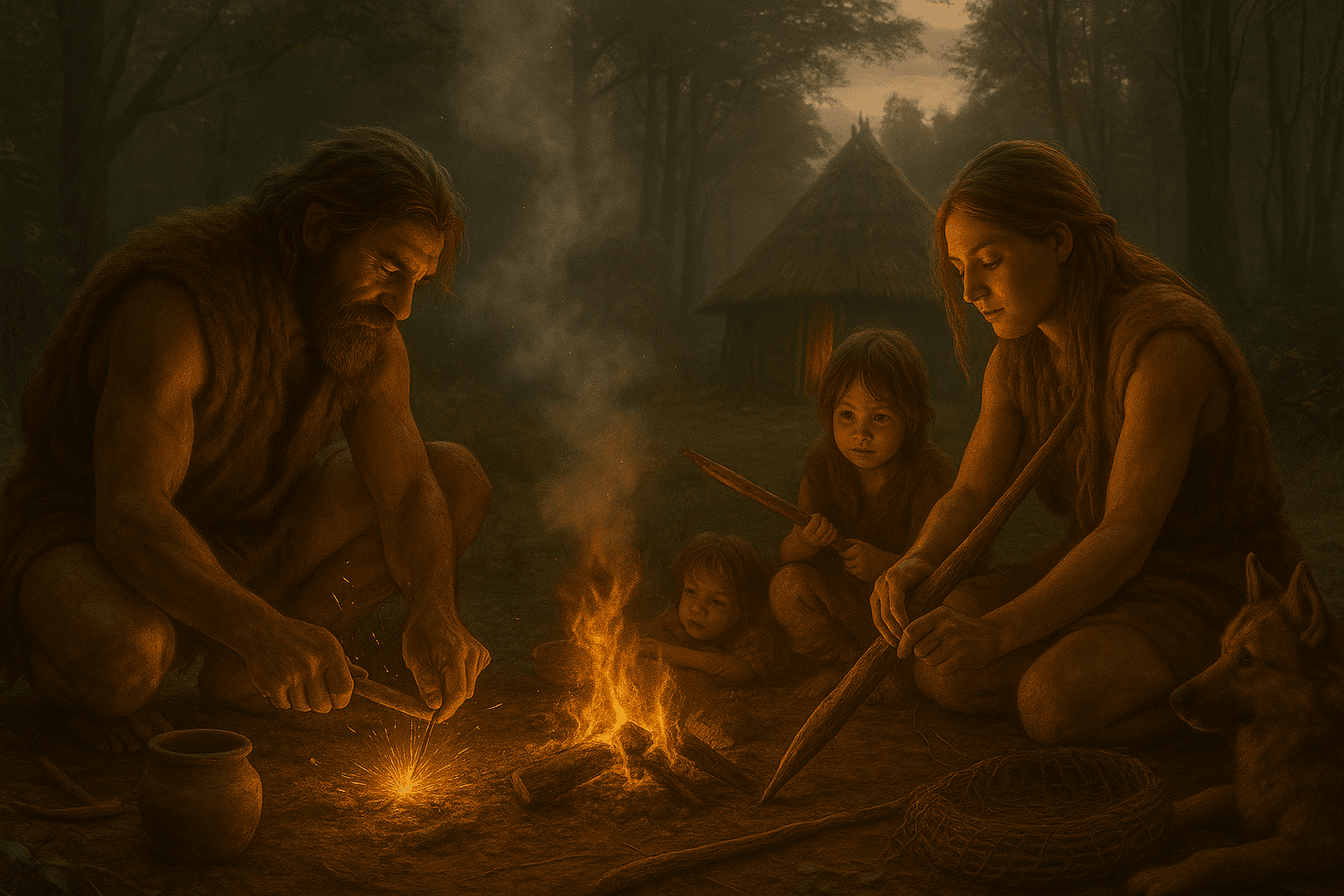
- Palaeolithic: temporary shelters, caves, hearth sites
- Mesolithic: semi-permanent huts, fishing camps
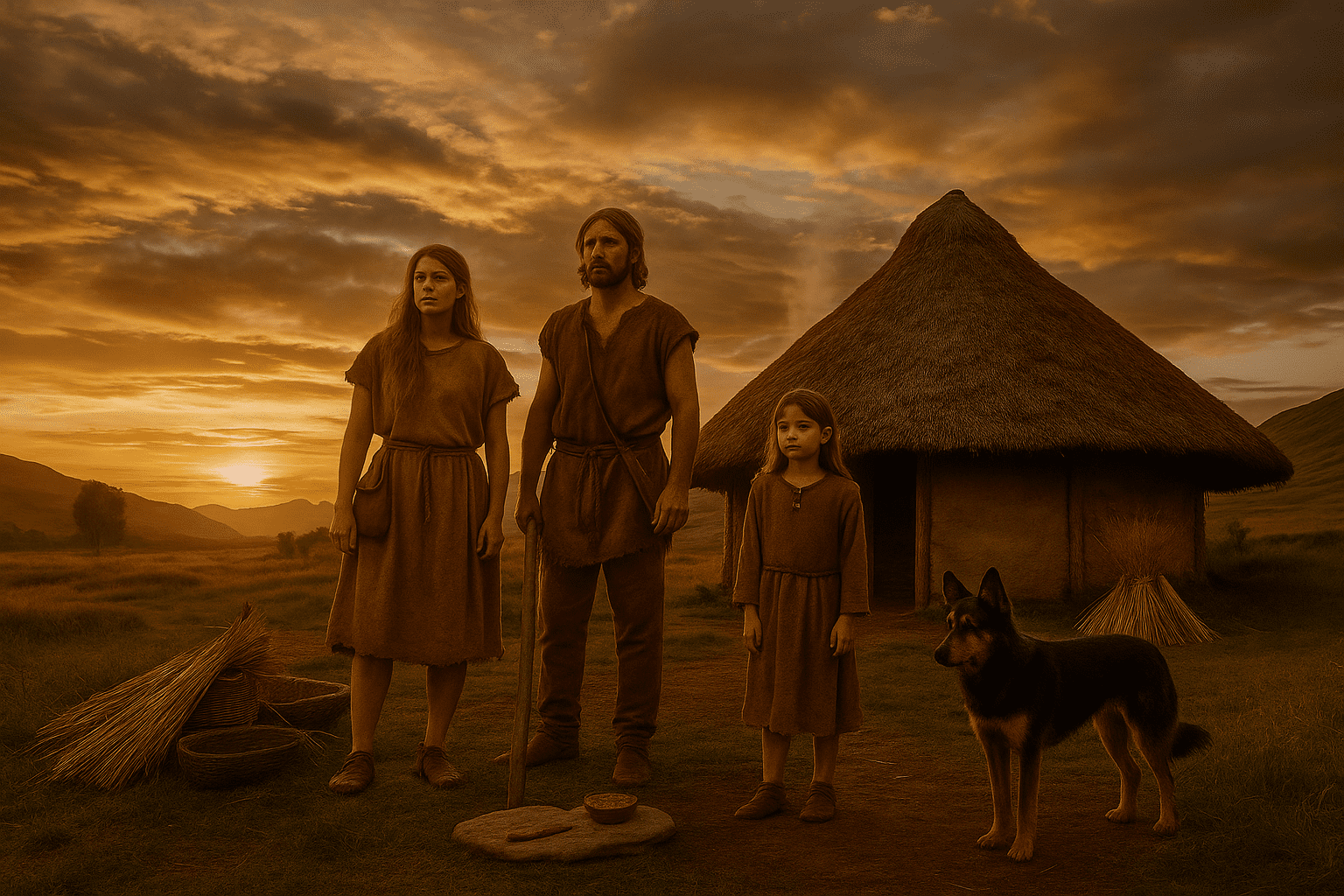
- Neolithic: villages, roundhouses, longhouses, megalithic monuments
Sites like Skara Brae, Çatalhöyük, and Star Carr provide exceptional windows into daily life.
Scientific Methods
Modern archaeology integrates cutting-edge science:
- Radiocarbon dating
- Dendrochronology
- Pollen analysis
- Micromorphology
- Genetic sequencing
- GIS and 3D modelling
These techniques refine our understanding of chronology, environment, and human movement.
Archaeology Across the Eras
Palaeolithic
- Earliest stone tools
- Cave art and symbolic behaviour
- Hunter-gatherer mobility
- Seasonal hunting camps
- Early burials (e.g., Sungir, Dolní Věstonice)
Mesolithic
- Microlith technology
- Rising sea levels shaping coastal life
- Fishing, foraging, early social complexity
- Wetland sites (e.g., Star Carr) revealing organic materials rarely preserved
- Evidence of ritual and personal adornment
Neolithic
- Farming and animal domestication
- Permanent settlements
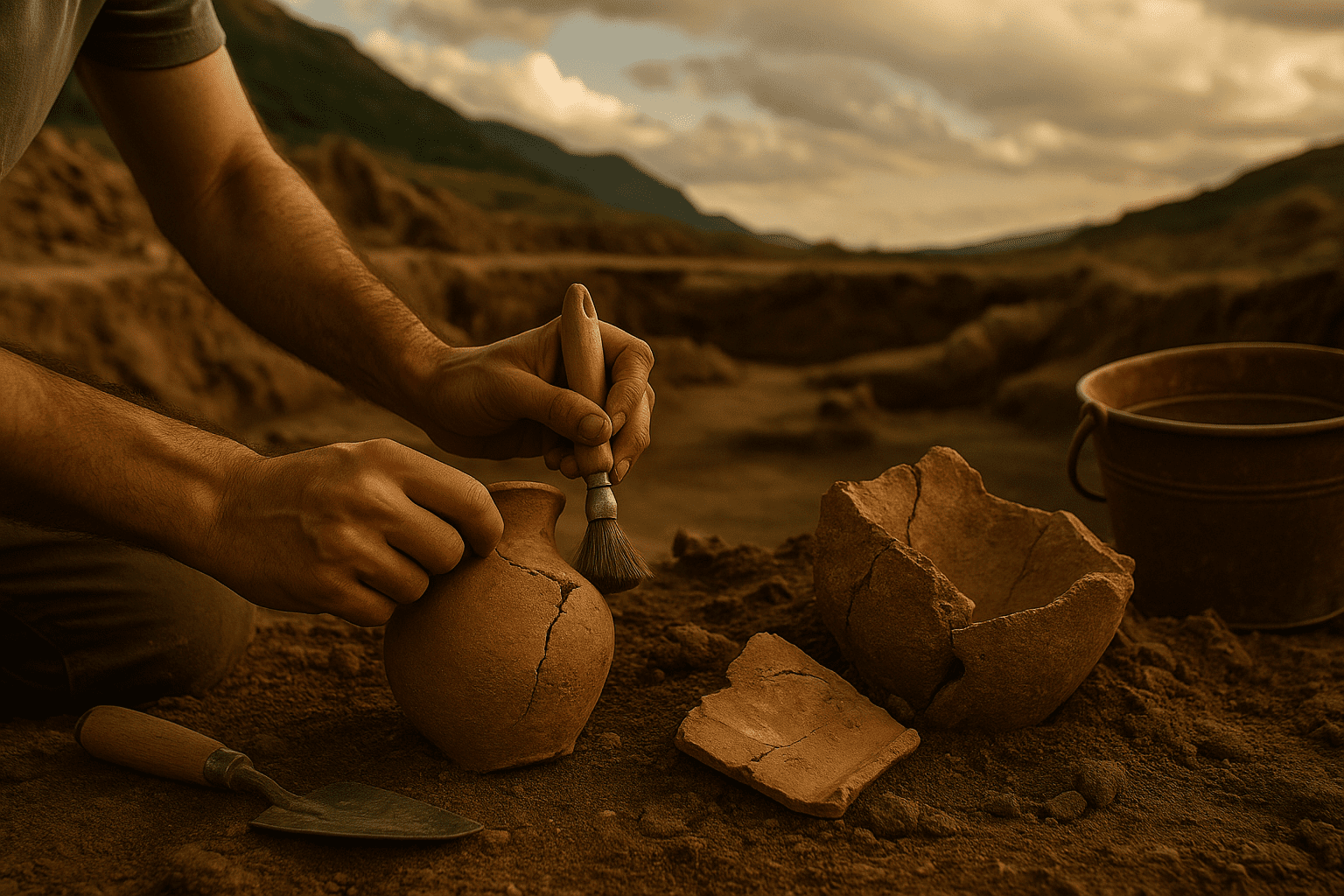
- Pottery
- Polished axes and timber construction
- Monumental architecture: long barrows, henges, stone circles
- Burials and ceremonial landscapes
Why Archaeology Matters
Archaeology is not simply about finding old objects — it is about reconstructing human experience.
It answers questions such as:
- How did humans adapt to Ice Age climates?
- When did symbolic thinking emerge?
- How did farming transform society?
- What did early families and communities value?
Through archaeology, prehistory becomes a living narrative rather than an abstract timeline.
Suggested Reading & References
Bradley, R. (1998). The Significance of Monuments: On the Shaping of Human Experience in Neolithic and Bronze Age Europe. Routledge.
Clarke, D. (1976). Mesolithic Europe: The Story of the Hunters, Fishers, and Gatherers.
Mellars, P. (1996). The Neanderthal Legacy. Princeton University Press.
Whittle, A. (2009). The Neolithic: A Very Short Introduction. Oxford University Press.
Bahn, P. (2020). Archaeology: A Very Short Introduction. Oxford University Press.
Smithsonian National Museum of Natural History – Human Origins Program.
British Museum – Prehistory Collection.