
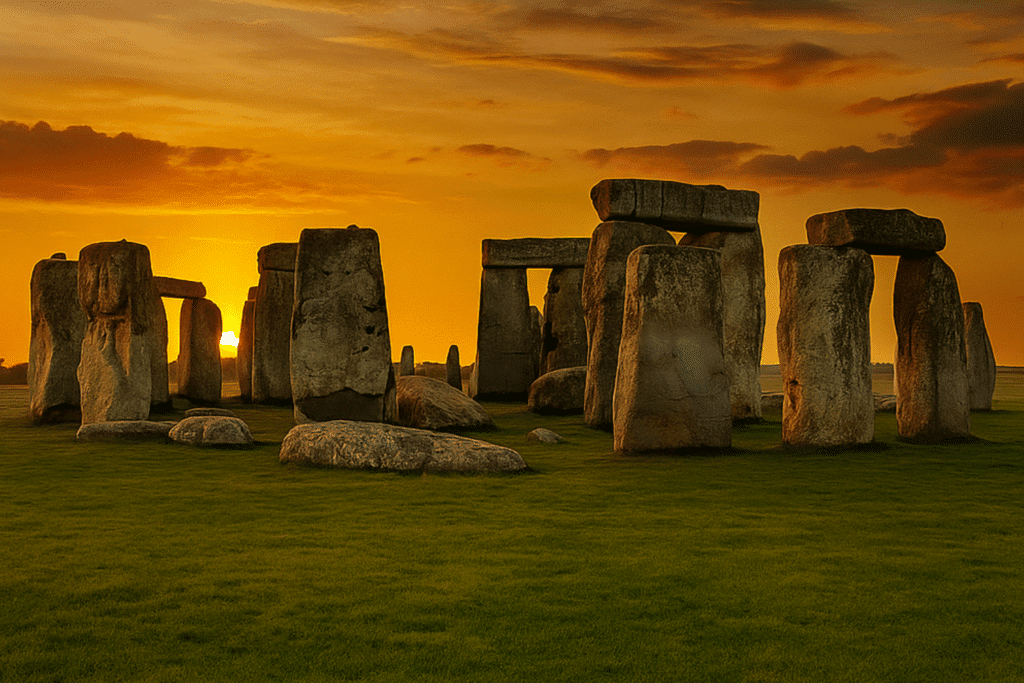
Prehistory covers the vast span of human existence before written records. It includes the evolution of our species, the development of tools, the shift from nomadic life to farming, the building of stone monuments, and the formation of the first settled communities. This article offers a detailed, accessible introduction to the Palaeolithic, Mesolithic, and Neolithic eras, placing Britain and Western Europe within the wider story of global human development.
Month: November 2025
Editorial Priniciple Related Content Related Link Related Link Related Link Related Link Related Link Related Link Articles Stones, Stars & Nature Read More Understanding Prehistory Read More Editorial Principle Read More Mission & Values Read More Pages Art & Artefacts Read More Collections Read More Virtual Tours Read More Podcasts Read More Documentaries Read More Archaeology Read More About This Site Read More Mythology Read More Creation & Virtue Read More Articles Read More Eras & Themes Read More Prehistory Read More Kings & Queens of Britain and Scotland Read More Resources Read More Timelines Read More Home Read More Article Index Read More Catagories Eras (2) Project (2) Blending Evidence With Reflective Insight How we approach truth, interpretation, and the living landscape of history Introduction Every article is built on a simple but powerful editorial principle: we combine verified historical evidence with thoughtful, reflective commentary. This approach recognises that history is not only a record of events — it is also a conversation between the past and the present, shaped by new discoveries, evolving interpretations, and the questions we bring to it. Why Evidence Matters Historical writing must be anchored in what can be demonstrated. For this reason, every piece begins with: Primary sources where available (documents, artefacts, archaeological findings). Peer-reviewed research from respected scholars. Cross-referencing between multiple independent sources. Clear lineage of information, especially where dates, genealogies, or timelines are concerned. This ensures the foundation of each article is reliable, transparent, and academically credible. Why Reflection Also Matters Evidence alone cannot answer every question. Gaps exist. Cultures interpret events differently. Human experience is layered, emotional, and often unrecorded. Reflective commentary allows us to explore: What historical events meant to the people who lived them. How stories evolve across generations. Why certain events are remembered, forgotten, or mythologised. Connections between ancestry, land, and identity. This reflective layer does not replace evidence — it expands upon it, turning historical data into meaningful understanding. Balancing Fact and Interpretation Our editorial principle ensures a clear separation between: Verified information (supported by citations), and Interpretation (clearly identified as analysis, commentary, or thematic reflection). This transparency gives readers confidence while preserving the richness of historical inquiry. How This Principle Shapes the Website This combined approach influences how we write about: Ancient civilisations Genealogical records Migration patterns War, politics, and social change Mythology and cultural symbolism Local histories and family archives Prehistoric landscapes and archaeological findings It allows complex topics to be presented in a way that is both rigorous and human. Why This Matters for Readers Readers benefit from: Clear, digestible historical explanations Context that makes events meaningful Insight into how the past shapes the present An inclusive narrative that honours both data and lived experience This principle encourages curiosity and invites readers to develop their own understanding rather than passively absorb information. A Note on Accuracy and Ongoing Learning That being said, history is an ever-evolving discipline. Despite my commitment to verified evidence, careful research, and responsible interpretation, I acknowledge that mistakes can happen. New findings emerge, records are corrected, and sometimes long-held assumptions must be revised. If you notice anything on this site that appears incorrect — and you can provide clear evidence, sources, or an alternative interpretation — I warmly invite you to contact me. Constructive corrections not only strengthen the work, they enrich the broader historical conversation. Together, we can ensure this project remains accurate, transparent, and continually improving. Conclusion History is both a record and a resonance — facts supported by evidence, and stories shaped by the human experience. By blending the two, we honour the depth of the past while remaining grounded in what is verifiably true. This is the foundation of every article on this site:evidence, integrity, and thoughtful reflection. Next Post
Mission & Values Related Content Related Link Related Link Related Link Articles Stones, Stars & Nature Read More Understanding Prehistory Read More Editorial Principle Read More Mission & Values Read More Pages Art & Artefacts Read More Collections Read More Virtual Tours Read More Podcasts Read More Documentaries Read More Archaeology Read More About This Site Read More Mythology Read More Creation & Virtue Read More Articles Read More Eras & Themes Read More Prehistory Read More Kings & Queens of Britain and Scotland Read More Resources Read More Timelines Read More Home Read More Article Index Read More Catagories Eras (2) Project (2) Historical Scope & Research Focus This project does not aim to chart the entire human past in all its global complexity. Instead, it defines a deliberate and rigorous field of study: the historical development of Europe and Western Europe, beginning with prehistoric societies and continuing through the ancient, medieval, early modern, and colonial eras. By framing the inquiry within this geographical and cultural arc, the site provides a coherent intellectual structure that allows visitors to follow the long evolution of ideas, technologies, social systems, and identities that shaped much of the modern world. This historical framework underpins the wider purpose of the project: to help people understand where we come from, how civilisation has developed, and how individual lives sit within that vast chain of inheritance. Through curated galleries, interactive timelines, virtual tours, and research summaries, the site seeks not simply to record history, but to make it accessible, navigable, and personally meaningful. This focus reflects three guiding principles: 1. Scholarly Coherence European and Western European history forms one of the most continuous and extensively documented narrative arcs available to researchers today. From early Neolithic communities and megalithic builders, through the Bronze and Iron Ages, the classical civilisations of Greece and Rome, the emergence of medieval kingdoms, the upheavals of the Renaissance and Reformation, the scientific and industrial revolutions, and the global transformations of the modern period—each era can be traced through surviving material culture, evolving political structures, linguistic development, and artistic and religious expression. By following this long thread of continuity, the project creates a structured landscape where connections can be seen clearly: Prehistory: Megalithic sites, early settlements, and ritual landscapes that shaped human identity long before written records. Antiquity: Classical cultures that established philosophical, legal, and architectural foundations still present today. Medieval Europe: The formation of nations, dynasties, and social systems that shaped later political identities. Renaissance to Enlightenment: The revival of classical thought, the spread of literacy, and the emergence of individual inquiry. Colonial & Industrial Eras: The expansion of European influence and the creation of the modern global system. Within the site, this coherence is reflected in chronological timelines, thematic grids, explanatory summaries, and collections of linked resources. Each element builds upon the last, helping visitors trace patterns rather than encounter isolated facts. By structuring knowledge in this way, the project preserves not only history, but the logic of history—an essential step in protecting humanity’s collective understanding of itself. 2. Source Depth & Accessibility Another key reason for concentrating on Western Europe is the sheer abundance and accessibility of surviving sources. Archaeological sites, museum catalogues, digitised manuscripts, academic monographs, and decades of peer-reviewed scholarship provide a stable foundation for careful, evidence-based interpretation. Much of this material is available in English, making rigorous research more feasible without relying on speculative or inaccessible data. This abundance of verifiable material allows the project to: Cross-reference archaeological evidence with written records. Showcase galleries of artefacts, architecture, and archaeological sites. Link to virtual tours that immerse visitors in landscapes of human history. Provide citations and curated resources that encourage further exploration. Develop accurate timelines that situate users within the wider historical narrative. By drawing on evidence that is already well preserved, peer-reviewed, and publicly accessible, the project safeguards against misinformation—a growing problem in the digital age. It aims to preserve clarity in a world where historical memory can be distorted or lost, offering visitors a reliable framework to understand how societies have formed, flourished, collapsed, and transformed. 3. Personal and Genealogical Relevance This research focus is also grounded in lived experience. My own family history, cultural heritage, and genealogical research are rooted in these regions. The histories presented here are not abstract academic exercises—they are intertwined with real lineages, migrations, and ancestral landscapes that stretch across centuries. By studying these histories, the project becomes a means of understanding: The cultural forces that shaped individual ancestors. The political events that influenced family migrations. The artistic and intellectual traditions carried through generations. The social conditions that formed the world we now inhabit. In this way, the site preserves not just collective civilisation-memory, but personal memory—inviting visitors to recognise how they, too, stand within an unbroken chain of human experience. The genealogical threads, contextual histories, and thematic analyses woven throughout the project allow individuals to locate themselves in the broader fabric of civilisation. A Defined Landscape, Not a Hierarchy While this project centres on Western Europe and its colonial extensions, it does so with full respect for the countless other historical traditions across the world. This is not an attempt to elevate one region above another. Rather, it is a methodological and practical decision: by focusing deeply on a specific historical landscape, the project can prioritise accuracy, nuance, and depth over superficial breadth. The intention is to build a clear, evidence-based foundation—one that helps preserve human understanding of our shared past and invites individuals to explore their own relationship to civilisation’s long and intricate story. Next Post