Prehistory Innovation
Ingenuity and the Technologies That Shaped Prehistoric Life
Innovation is one of the defining characteristics of humanity. Long before writing, farming, or cities, our ancestors were inventing new ways to survive, create, communicate, and shape the world around them. Prehistory is the story of this ingenuity — a slow-burning revolution stretching across millions of years, carrying us from simple stone flakes to the first farmers and monumental architects.
By tracing innovation across the Palaeolithic, Mesolithic, and Neolithic periods, we uncover how humans adapted, experimented, and transformed their environments with increasing complexity.
Palaeolithic Innovation: The First Tools and Technologies
Innovation begins deep in the Palaeolithic, with the earliest known stone tools dating back over 2.5 million years.
Stone Tools: Humanity’s First Technology
Oldowan flakes → Acheulean hand-axes → advanced blade technologies.
Each step reflects growing intelligence, planning, and dexterity.
These tools were used for:
- cutting meat
- processing plants
- shaping wood
- hunting and butchery
The Acheulean hand-axe is particularly iconic — a perfect fusion of form and function, crafted for over a million years with astonishing consistency.
Fire: Mastery of a Natural Force
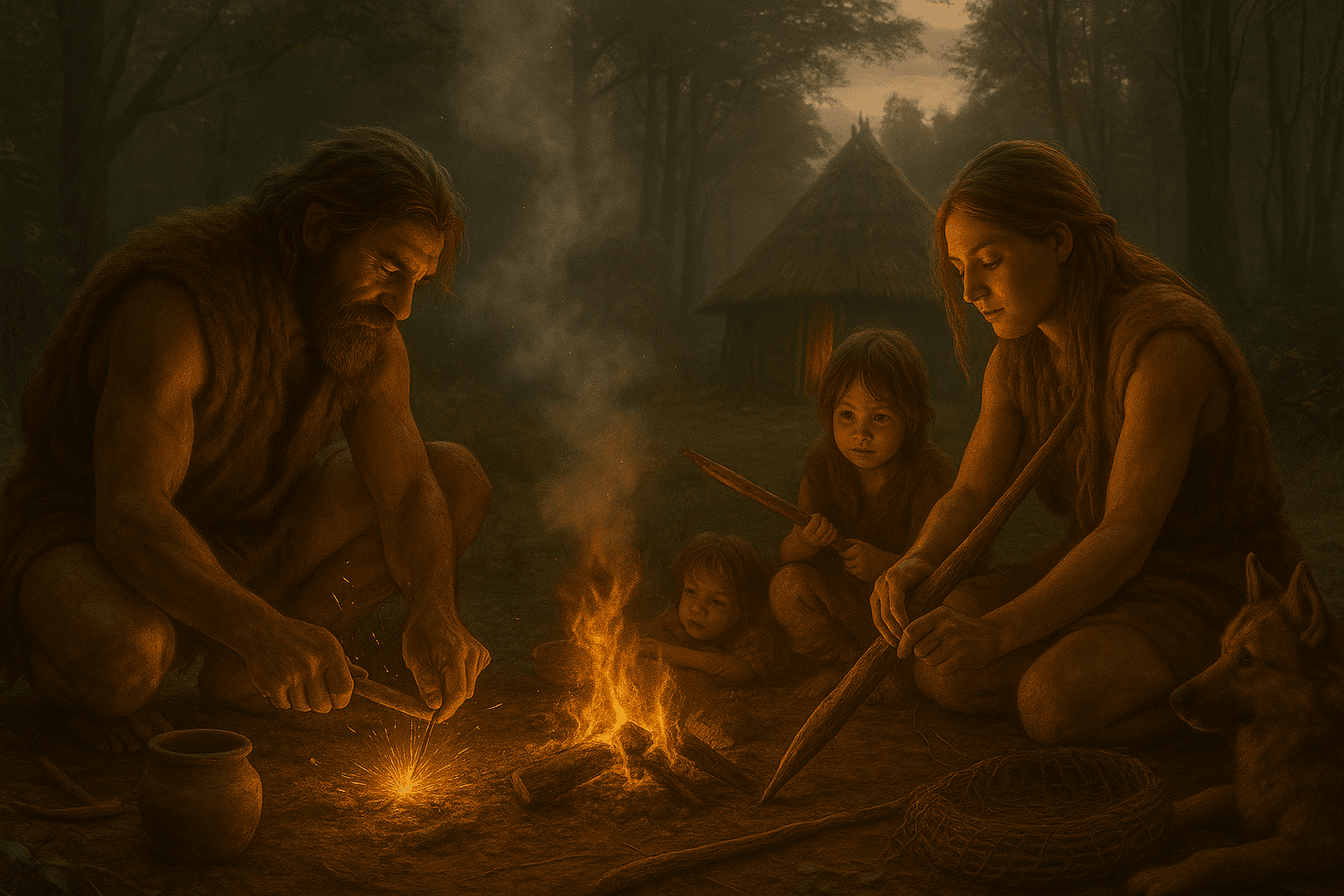
Controlled fire was one of the most transformative innovations in human history.
It enabled:
- warmth and light
- protection from predators
- expanded diets through cooking
- social gatherings around hearths
- nighttime activity
Fire became both a practical tool and a symbolic centre of early communities.
Clothing & Shelter: Survival Through Creativity
As humans migrated into colder climates, they adapted with:
- tailored clothing
- hide-working techniques
- bone needles
- structured shelters and huts
These innovations allowed people not just to survive extreme environments, but to thrive in them.
Art & Symbolic Communication
Art is a technology of meaning.
- cave paintings
- portable figurines
- carved bone and antler
- ornaments and beads
These reveal early innovations in memory, identity, ritual, and storytelling.
Mesolithic Innovation: Adaptation in a Changing World
As Ice Age climates warmed, landscapes transformed — forests grew, sea levels rose, and coastlines shifted. Mesolithic people responded with a burst of creativity.
Microliths: Tools for a Forested World
Small, razor-sharp stone blades were set into wooden shafts to create:
- arrows
- spears
- knives
- composite tools
Microliths were light, adaptable, and perfect for hunting in dense forests.
Fishing & Watercraft
With rising seas and expanding rivers, water became a primary resource.
Innovations included:
- dugout canoes
- fish traps and weirs
- barbed harpoons
- nets and hooks
These opened up new food sources and supported semi-sedentary lifestyles.
Woodworking & Organic Craft
The Mesolithic world preserves stunning examples of:
- worked antler
- polished wood
- decorated paddles
- woven fibres
- early containers
At Star Carr, archaeologists uncovered elaborate antler headdresses — innovations blending ritual with craftsmanship.
Social & Ritual Technologies
Innovation isn’t only material.
Mesolithic communities developed:
- personal adornment
- group identity symbols
- structured ritual deposits
- shared ceremonial practices
These innovations shaped cultural cohesion and memory.
Neolithic Innovation: Farming, Architecture & Monumentality
The Neolithic marks one of the most significant transformations in human history — the development of agriculture and settled life.
Farming Tools & Domestication
New tools emerged to support crop cultivation:
- sickles with flint blades
- grinding stones
- storage pits & pottery
- polished axes for forest clearance
Domestication of animals (dogs, sheep, goats, cattle) revolutionised food production and mobility.
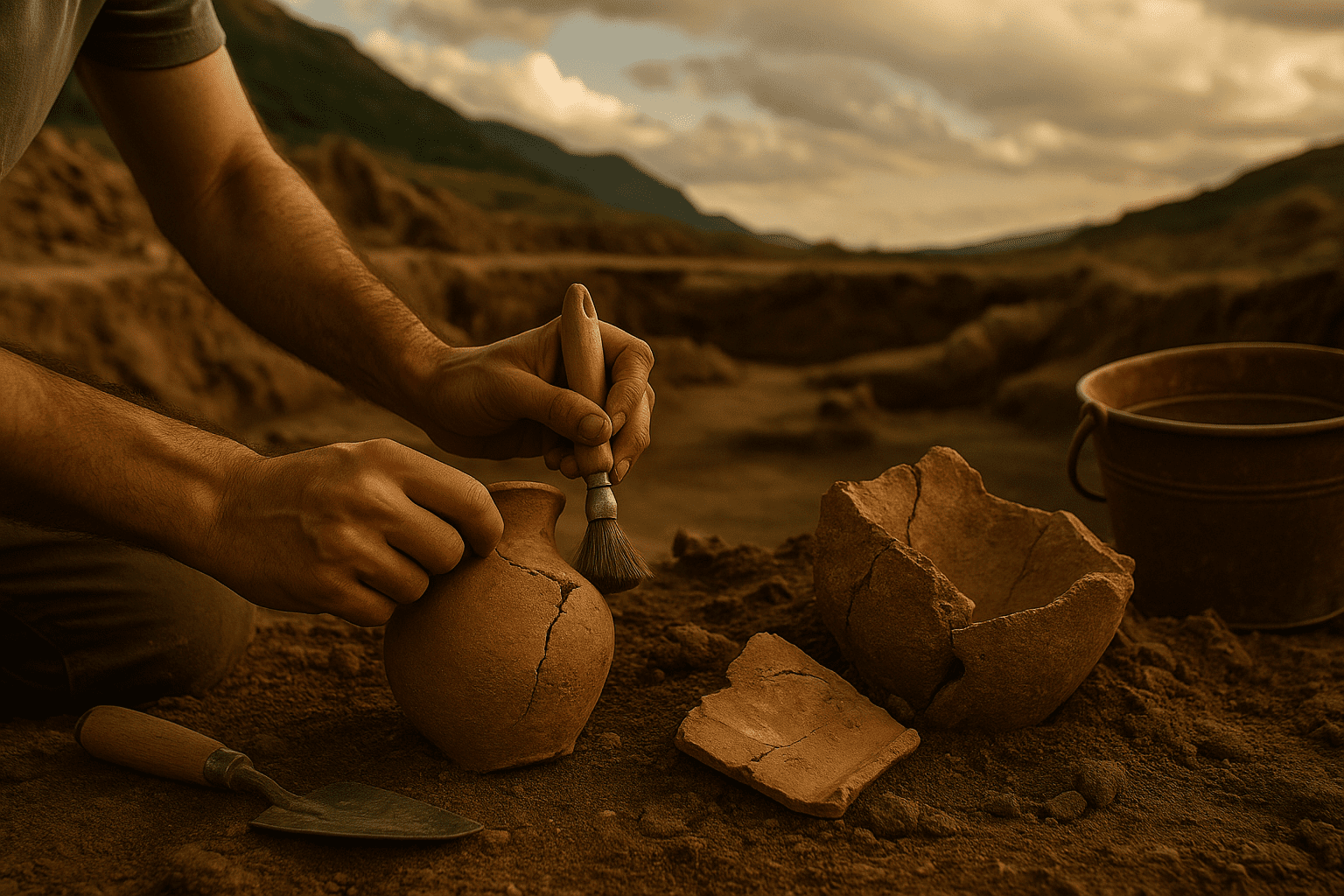
Pottery: A Technological Breakthrough
Pottery allowed for:
- food storage
- cooking innovation
- long-term settlement stability
- artistic expression
Different regions developed distinct ceramic styles, marking cultural identities.
Permanent Architecture
With farming came permanent homes:
- timber roundhouses
- longhouses
- granaries
- early field systems
- village clusters
Architecture became a canvas for social structure and identity.
Monumental Construction: Engineering the Sacred Landscape
Innovation in the Neolithic reached monumental scales:
- long barrows
- megalithic tombs
- stone circles
- henges
- causewayed enclosures
Using only stone, wood, rope, and human effort, Neolithic communities engineered vast ceremonial landscapes that aligned with the cosmos.
This required:
- logistical planning
- mathematical understanding
- cooperative labour
- symbolic vision
It was innovation applied to both engineering and belief.
Innovation Across Eras: A Continuous Thread
Innovation is not linear — it is adaptive.
Across prehistory, people responded to:
- climate
- landscape
- resources
- social needs
- ritual and symbolic meaning
Yet all innovation shares one thing: the desire to shape the world and make life better, more meaningful, and more connected.
📚 Suggested Reading & References
Mithen, S. The Prehistory of the Mind.
Gamble, C. Origins and Revolutions: Human Identity in Earliest Prehistory.
Whittle, A. Europe in the Neolithic.
Renfrew, C. Prehistory: Making of the Human Mind.
British Museum — Prehistoric Technology Collections.
Smithsonian Human Origins Program — Tool Evolution.