The Neolithic
c. 6,000 – 2,000 BCE (varies by region)
Farming, Monument-Building, and the Rise of Settled Life
1. Introduction
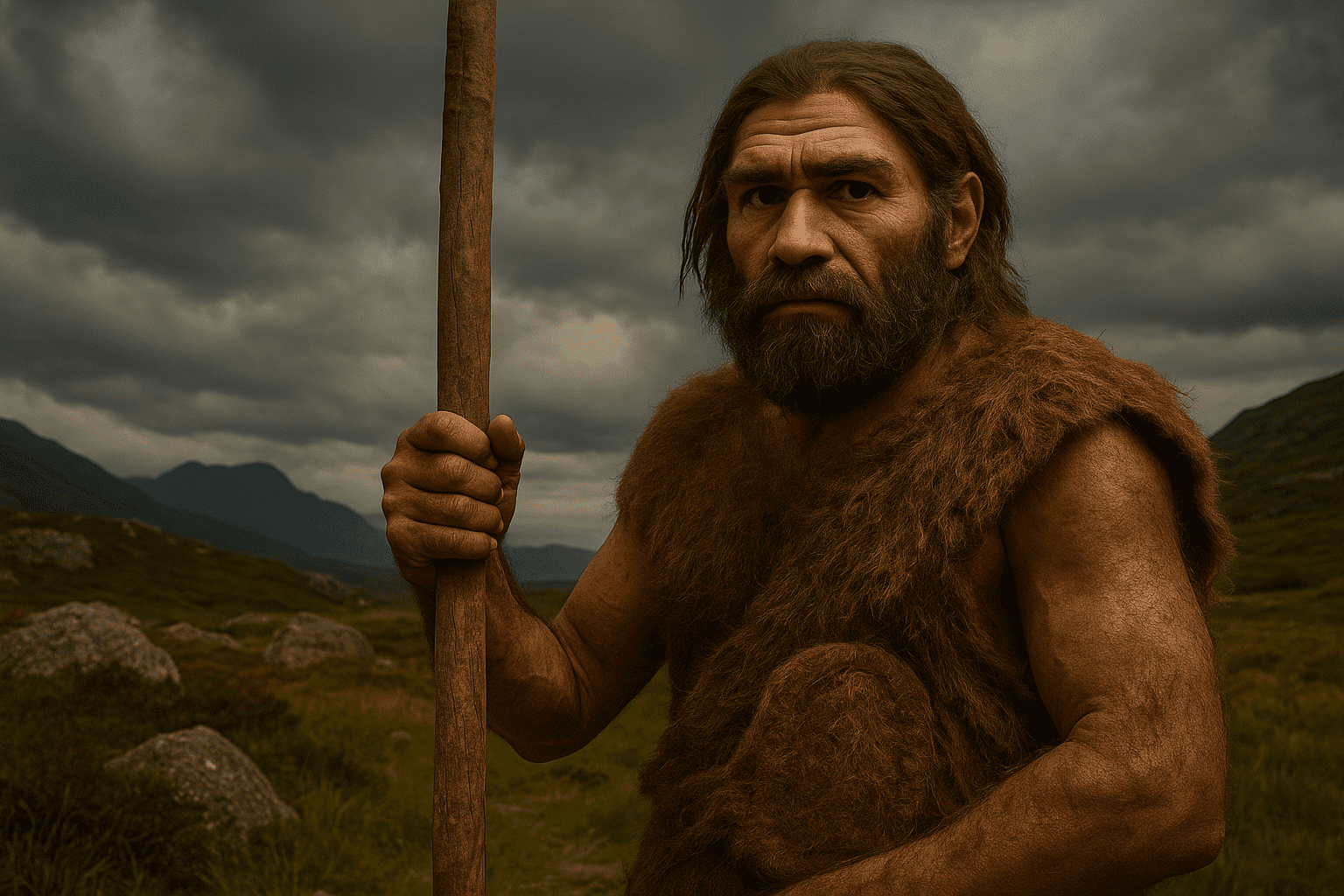
The Neolithic—the New Stone Age—marks one of the most transformative eras in human history.
Where the Palaeolithic was the age of human becoming and the Mesolithic the age of human adaptation, the Neolithic is the age of human transformation.
Here, societies across Europe and the Near East shifted from:
- gathering → growing
- hunting → herding
- roaming → settling
- surviving → building
- observing → measuring
- worshipping in nature → constructing sacred landscapes
This period witnessed the rise of agriculture, pottery, polished stone technology, long-term villages, and the monumental architectures that still shape our imaginations: chambered tombs, stone circles, aligned passage mounds, and ritual landscapes connected to the movements of the sun and stars.
2. Chronology & Regional Variation
The Neolithic did not begin everywhere at the same time.
Near East / Fertile Crescent
- Early farming communities by 10,000–8,000 BCE
- Domestication of wheat, barley, sheep, goats
South-East Europe
Central Europe
Britain & Ireland
- Very late arrival: 4,000–2,500 BCE
- Agriculture introduced by migrating farmer-groups
Wikipedia overview:
https://en.wikipedia.org/wiki/Neolithic_Europe
The staggered spread of farming across Europe created a continent of parallel Neolithics — all driven by similar pressures, but expressed in regionally distinct ways.
3. The Agricultural Revolution
Agriculture is the defining hallmark of the Neolithic.
Domesticated Plants
Domesticated Animals
Consequences of Farming
Agriculture generated:
- food surpluses
- population growth
- more permanent settlements
- stronger notions of land ownership
- inter-group boundaries and cooperation networks
- increased disease load (denser populations)
It shifted the fundamental rhythm of life from following migratory herds to following seasonal cycles of sowing and harvesting.
4. Settlements & Social Organisation
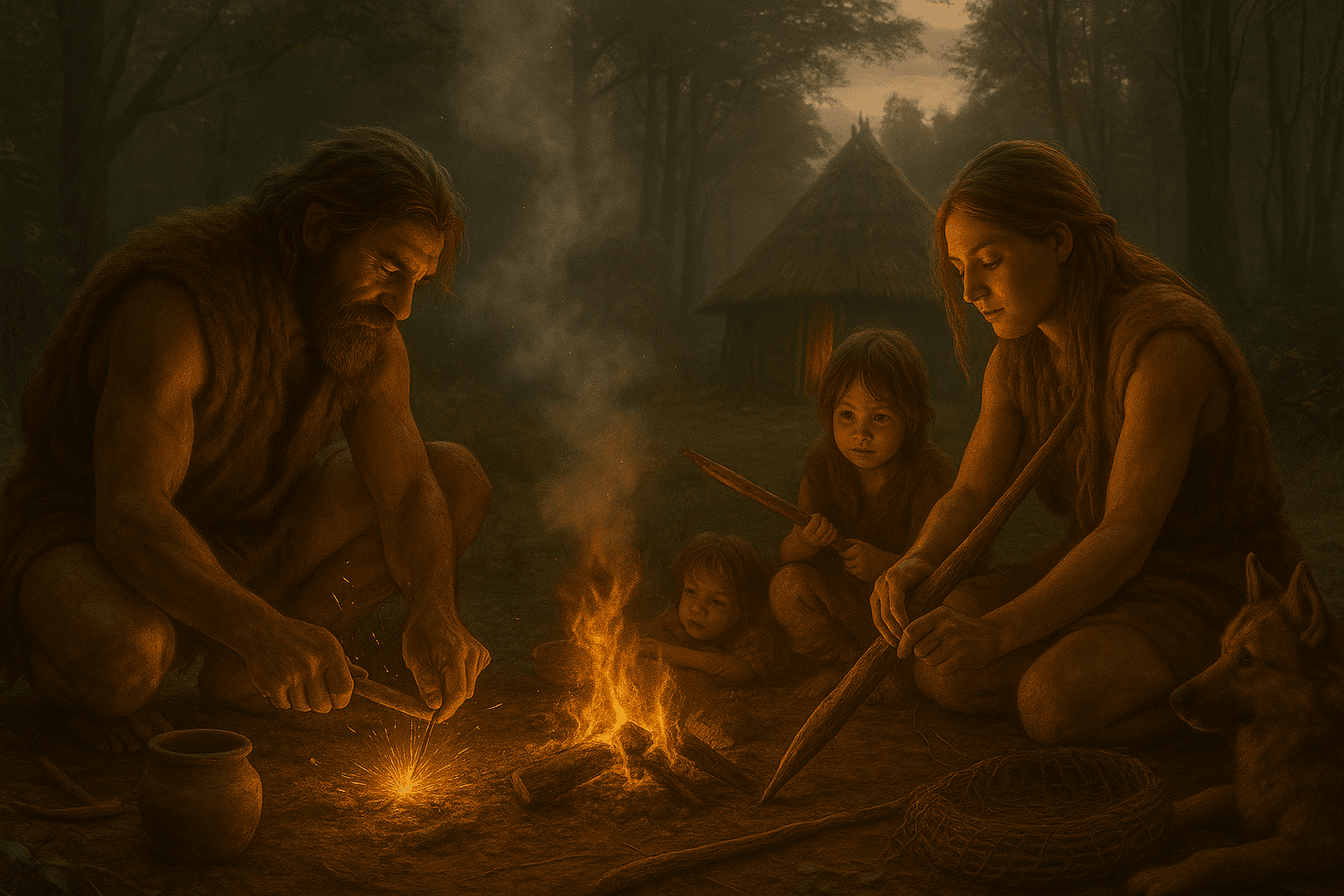
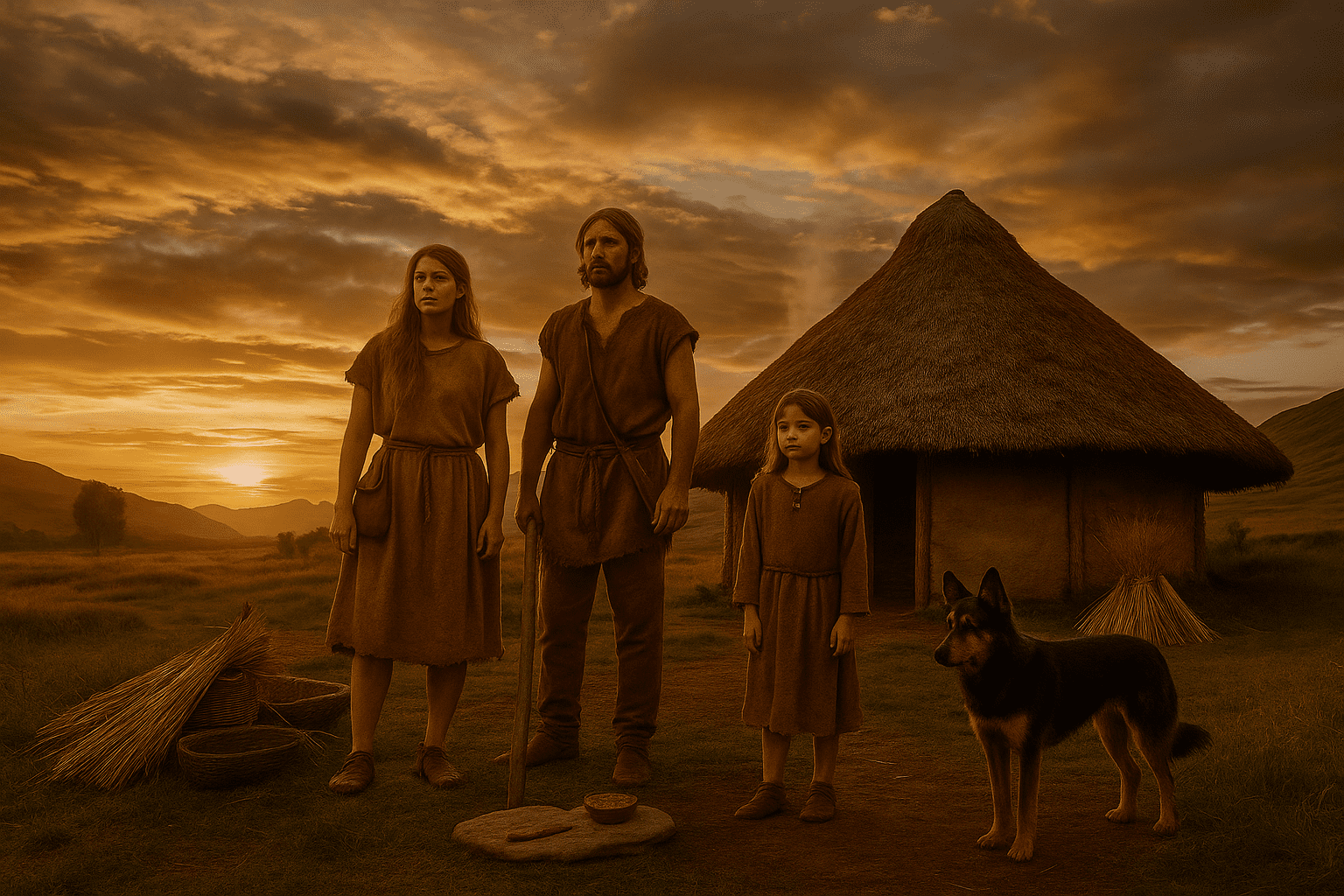
Neolithic people built settlements that could last generations.
House Types
- timber longhouses
- stone dwellings (e.g., Skara Brae)
- wattle-and-daub structures
- large rectangular communal buildings
Villages & Early Communities
- Çatalhöyük (Turkey): densely packed, rooftop-entry homes
- Skara Brae (Orkney): stone-built, furniture intact
- LBK longhouse villages in Central Europe
Skara Brae wiki:
https://en.wikipedia.org/wiki/Skara_Brae
Social Life
- extended family groups
- shared labour
- communal feasting
- emerging craft specialisation
- ritual leaders or elders (no formal hierarchy yet)
These communities were not “simple”—they were socially coordinated, symbolically rich, and increasingly interdependent.
5. Technology & Innovation
The Neolithic brought a suite of technological revolutions.
Polished Stone Axes
Transformational tools that allowed:
- forest clearing
- woodworking
- house building
- large ceremonial constructions
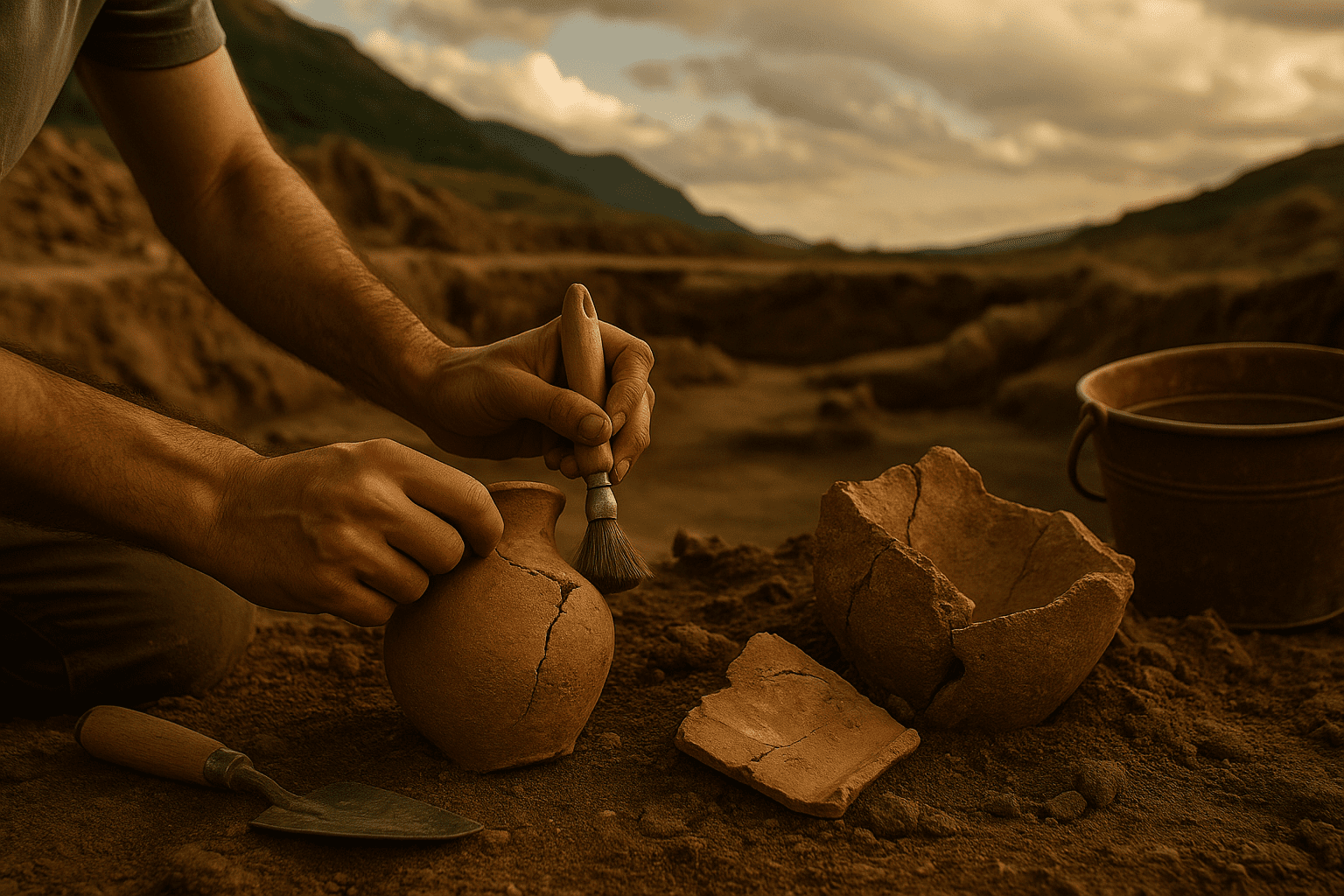
Pottery
- storage vessels
- cooking pots
- decorated ceremonial wares
Textiles & Rope
Evidence for loom-based fabric weaving and fibre production.
Architecture
- passage tombs
- megalithic long barrows
- mortuary enclosures
- early timber circles
Neolithic technology made the built world possible.
6. Mortuary Rituals & Ancestral Landscapes
The Neolithic places extraordinary emphasis on the dead, memory, and the land.
Burial Types
- chambered tombs
- long barrows
- collective burials
- cremation later in the period
Symbolic Themes
- cyclical renewal
- ancestor veneration
- ties between family, land, and lineage
Neolithic burial monuments were not just graves — they were territorial markers, ritual centres, and repositories of cosmological belief.
7. Megalithic Architecture & Monument Building
This is the great flowering of Europe’s prehistoric architecture.
Types of Monuments
- Passage tombs (Newgrange)
- Standing stone alignments (Carnac)
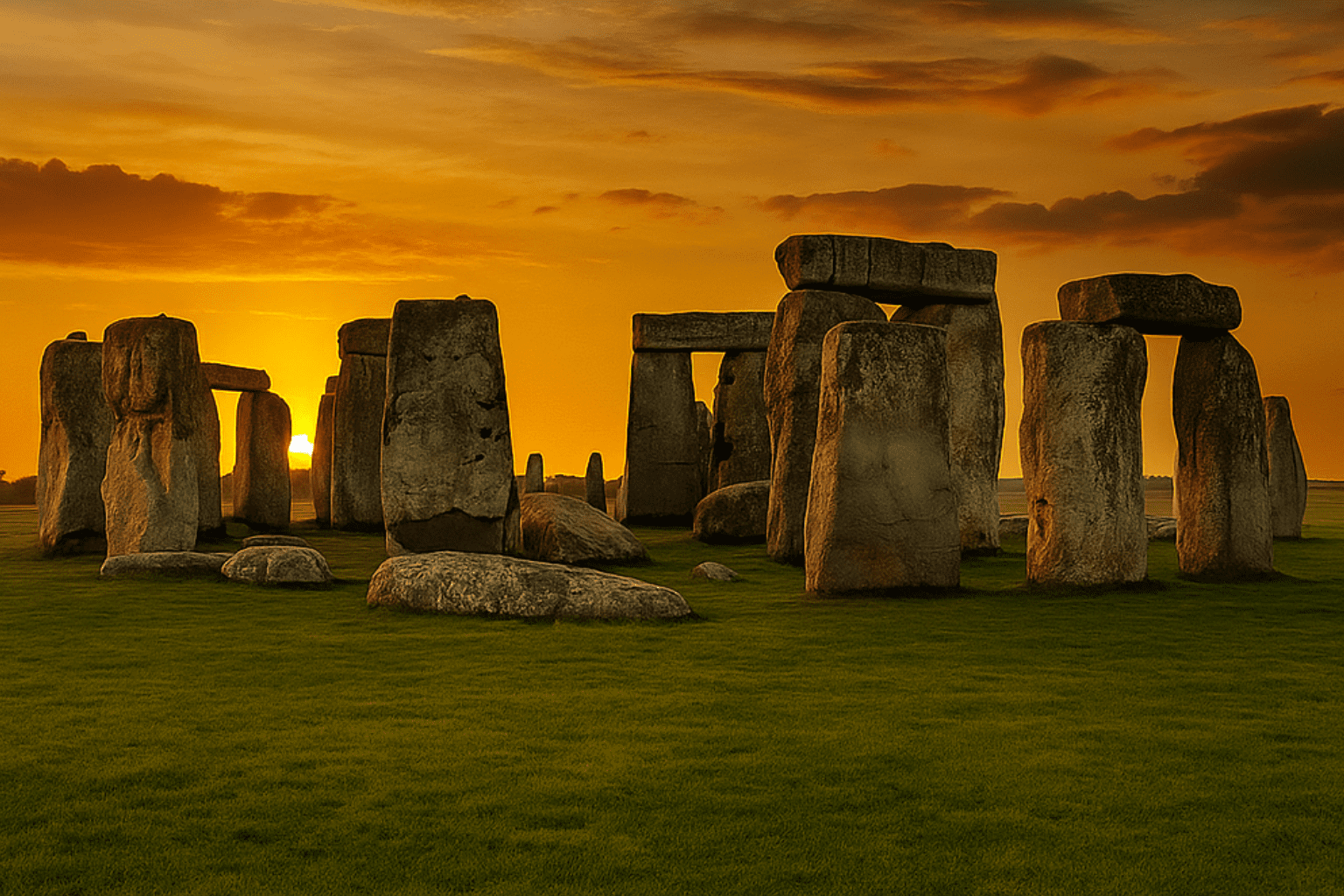
- Stone circles (Avebury, Stonehenge)
- Dolmens (Poulnabrone)
- Long barrows (West Kennet)
Function & Meaning
Most scholars agree these monuments are deeply connected to:
- seasonal cycles
- astronomical alignments
- ritual gatherings
- social bonding
- identity and ancestry
8. Astronomy & Landscape Alignment
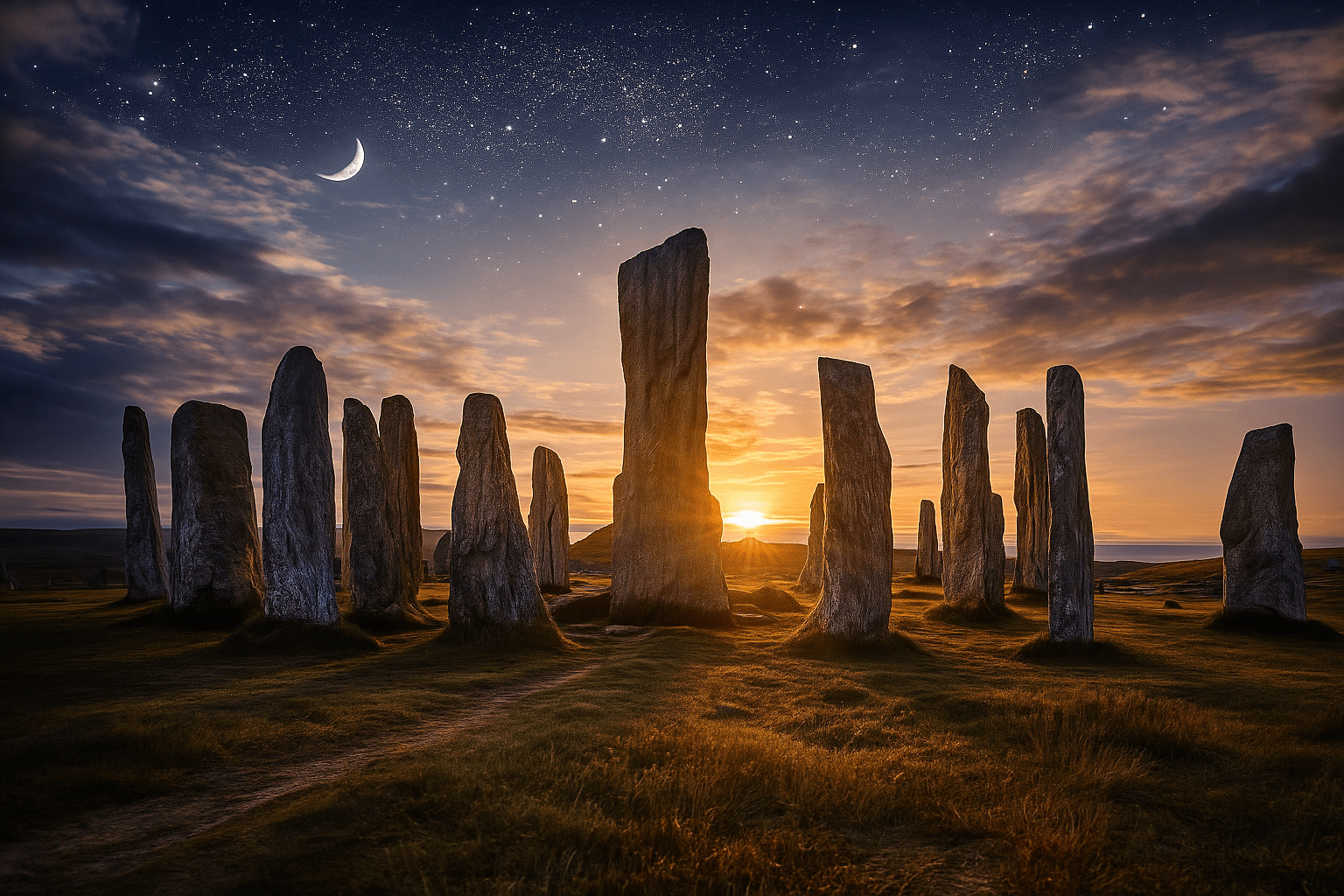
Neolithic monuments are intentionally placed and oriented.
Famous Alignments
- Newgrange: winter solstice sunrise
- Maeshowe: winter solstice sunset
- Stonehenge: solstitial axis
- Callanish: lunar “standstill” event
- Carnac: rows aligned with horizon features
Newgrange wiki:
https://en.wikipedia.org/wiki/Newgrange
Monuments become instruments of light, synchronising ritual time with cosmic time.
9. Art, Symbolism & Identity
Neolithic symbolism is geometric, abstract, and often enduring.
Artistic Features
- spirals and triple-spirals
- cupmarks
- lozenges
- chevrons
- polished stone carvings
- decorated pottery
Sites like Newgrange preserve some of Europe’s finest prehistoric art.
10. Trade, Exchange & Travel
The Neolithic world was surprisingly interconnected.
- long-distance movement of polished stone axes
- trade of obsidian, flint, pottery styles
- sea travel along Atlantic coastlines
- shared architectural traditions
The “Atlantic Megalithic tradition” stretches from Portugal to Scotland — evidence of widespread cultural communication.
11. The End of the Neolithic & the Coming of Metal
By c. 2,500 BCE, copper and later bronze technologies spread across Europe.
The Neolithic transitions gradually into:
- metallurgy
- Beaker cultures
- individualised burial practices
- new social hierarchies
- new artistic styles
But many Neolithic monuments continued to be used, reused, and reinterpreted for millennia.
12. Cultural Legacy & Significance
The Neolithic shapes the foundations of the world we still live in.
It gave humanity:
- agriculture
- permanent settlements
- architectural planning
- property and territoriality
- ancestral landscapes
- ritual monuments
- astronomical knowledge preserved in stone
It marks the beginning of place-based identity, spiritual landscapes, and the relationship between human society and cosmic cycles.
Your Legacy Atlas project is literally a continuation of a Neolithic impulse:
to situate ourselves within time, land, and meaning.
13. References & Further Reading
Academic Sources
- Bradley, R. (1998). The Significance of Monuments.
- Cooney, G. (2000). Landscapes of Neolithic Ireland.
- Thomas, J. (1999). Understanding the Neolithic. Routledge.
- Whittle, A. (1996). Europe in the Neolithic.
Accessible Resources
https://en.wikipedia.org/wiki/Neolithic_Europe
https://www.britannica.com/event/Neolithic-Period
https://www.worldhistory.org/neolithic/
https://www.heritagedaily.com/